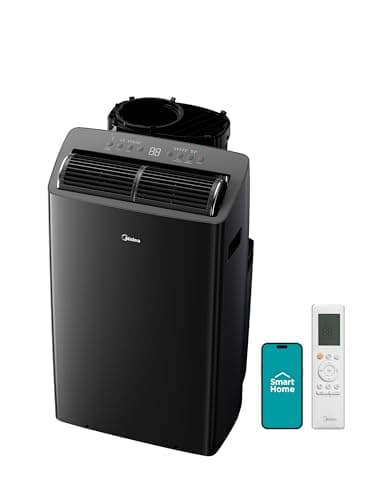
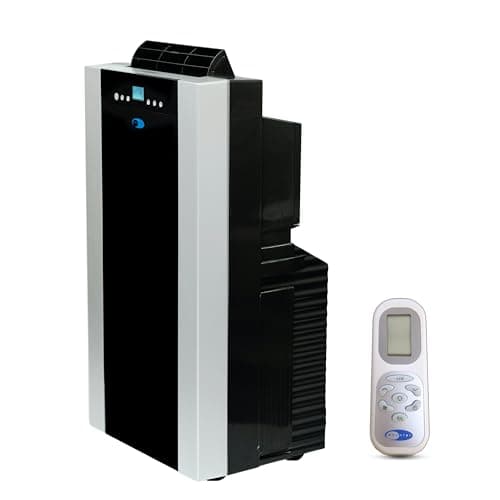
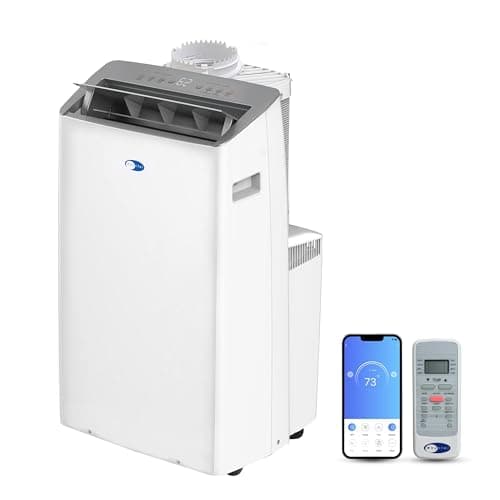
Single-hose portable ACs use one exhaust hose to vent hot air outside, but this creates negative air pressure in the room, pulling warm outside air in through gaps around doors and windows. Dual-hose units use a second hose to draw in outside air for the condenser, keeping room pressure neutral and delivering significantly better cooling efficiency. In our testing and research, dual-hose units like the Midea Duo and Whynter ARC-14S consistently outperform single-hose models in real-world cooling, especially on very hot days.
ASHRAE BTU is the older measurement standard that tests cooling in ideal laboratory conditions - it produces the highest, most flattering numbers. The DOE (Department of Energy) standard and its SACC (Seasonally Adjusted Cooling Capacity) measurement account for real-world factors like heat generated by the unit and air infiltration from exhaust. DOE/SACC ratings are typically 30-40% lower than ASHRAE ratings for the same unit. Always compare DOE or SACC numbers when shopping, as they reflect actual cooling performance you will experience in your home.
A portable AC is designed to cool a single room or zone, not an entire apartment. Even a powerful 14,000 BTU unit will struggle to cool multiple rooms through doorways and hallways. For best results, place the unit in the room you want to cool, close the door, and let it work on that space. If you need to cool multiple rooms, consider a unit on casters that you can move, or invest in a separate unit for each room. The Midea Duo MAP14HS1TBL is the best option for larger single rooms up to 550 square feet.
Running costs depend on the unit's wattage, your electricity rate, and how many hours you run it. A typical 10,000 BTU portable AC uses about 1,000-1,200 watts and costs roughly $0.15-0.18 per hour at average US electricity rates. Running it 8 hours a day translates to about $36-43 per month. Inverter models like the Midea Duo use 30-40% less energy than fixed-speed compressors, potentially saving $10-15 per month. Dual-hose units also save energy indirectly by cooling more efficiently.
Most modern portable ACs feature self-evaporation systems that exhaust moisture through the vent hose along with hot air. In moderate humidity, you may never need to drain them. However, in very humid conditions (above 60-70% relative humidity), the internal reservoir can fill faster than it evaporates, triggering a full-tank shutoff. In these cases, you will need to drain the unit manually. Models like the Midea Duo and Dreo AC515S handle self-evaporation particularly well. If you live in a very humid climate, look for units with a continuous drain hose option.
Window AC units are generally more efficient and less expensive than portable units of equivalent BTU rating, because they vent heat directly outside without any exhaust hose losses. However, portable ACs make sense when you cannot install a window unit - such as in apartments with rental restrictions, casement or sliding windows, or HOA rules that prohibit window units. Portable ACs also have the advantage of being movable between rooms. If you can install a window unit, that is usually the more cost-effective choice. If you cannot, a dual-hose portable AC like the Midea Duo offers the closest performance to a window unit.

 1/5
1/5