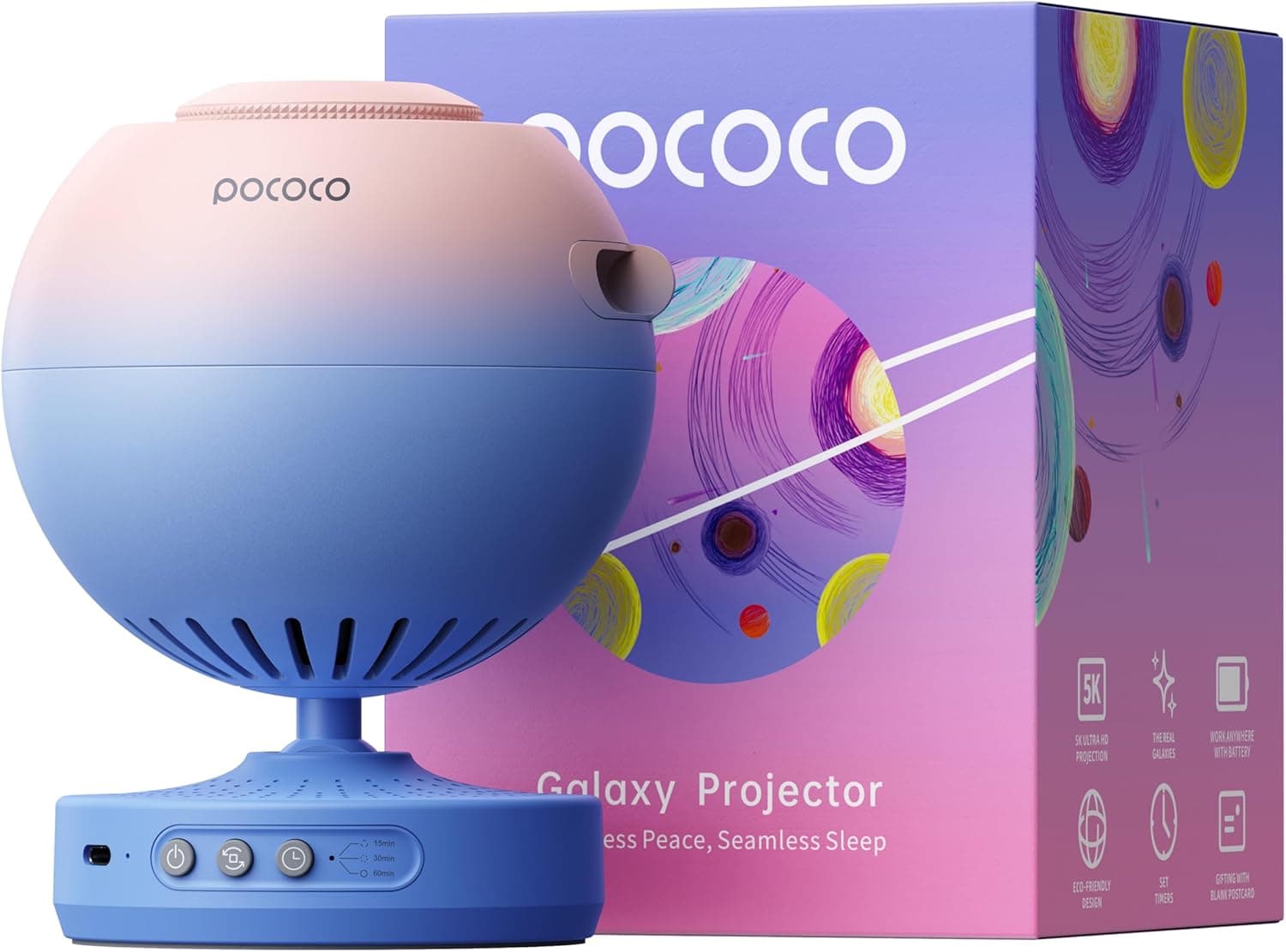
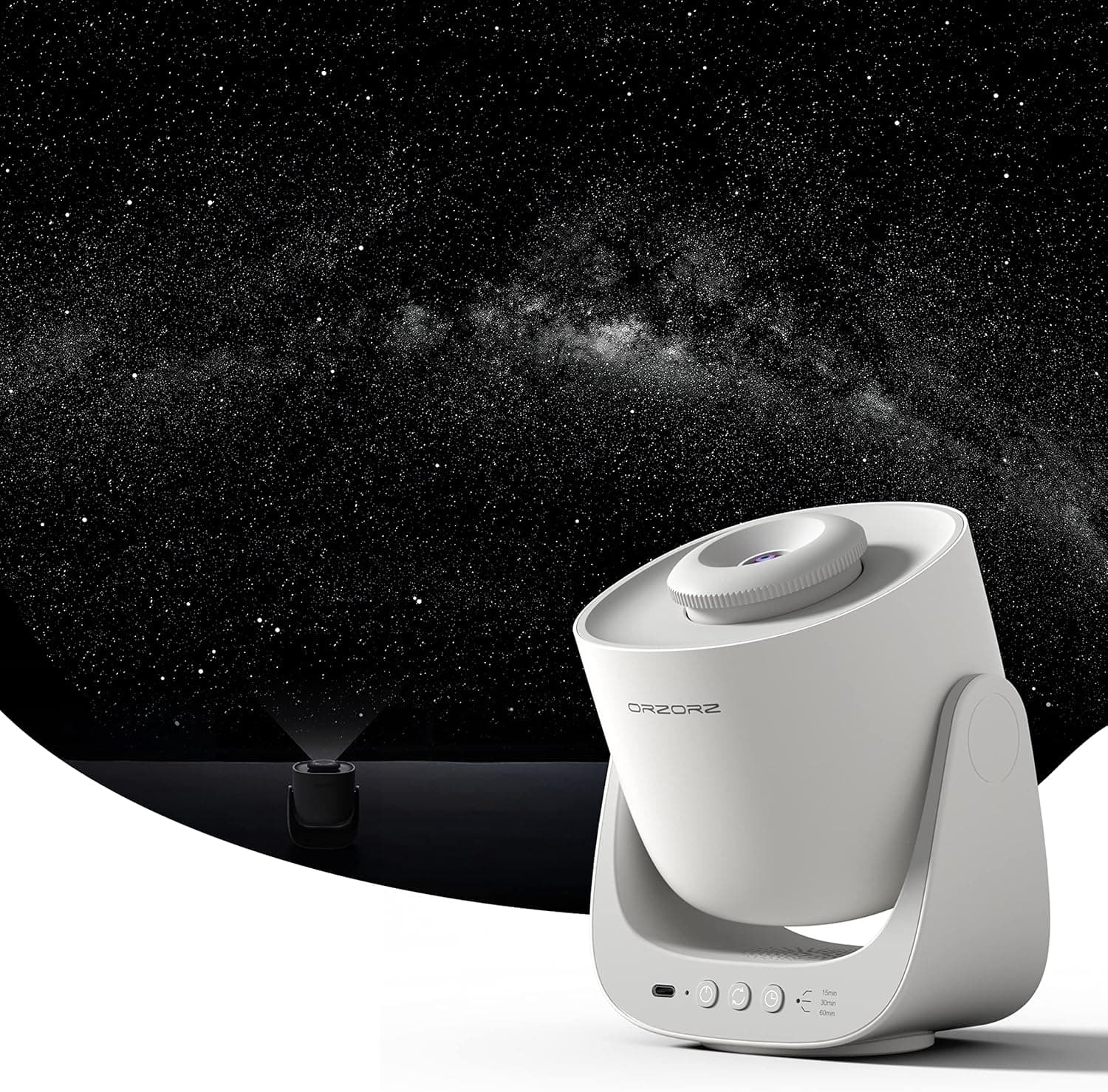
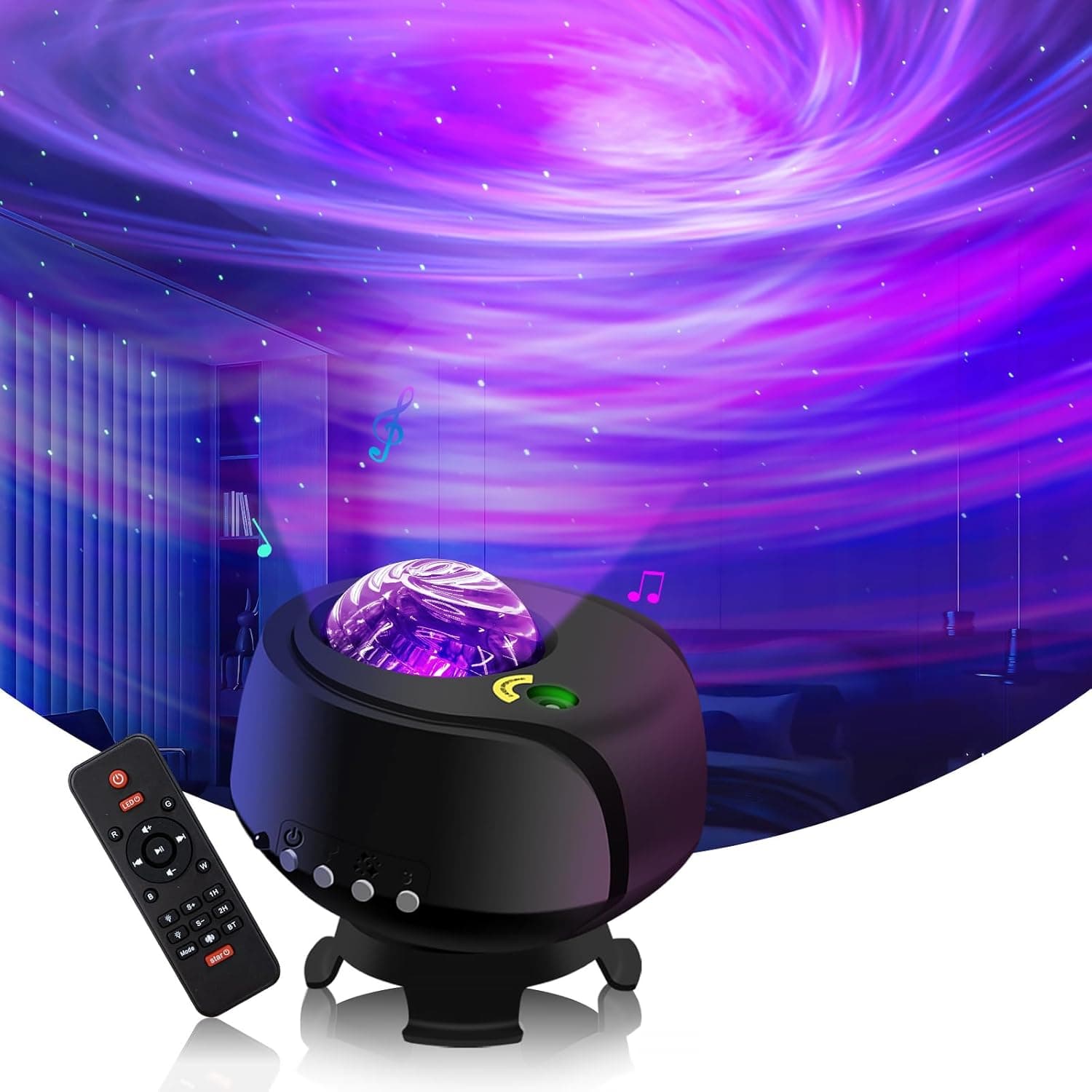
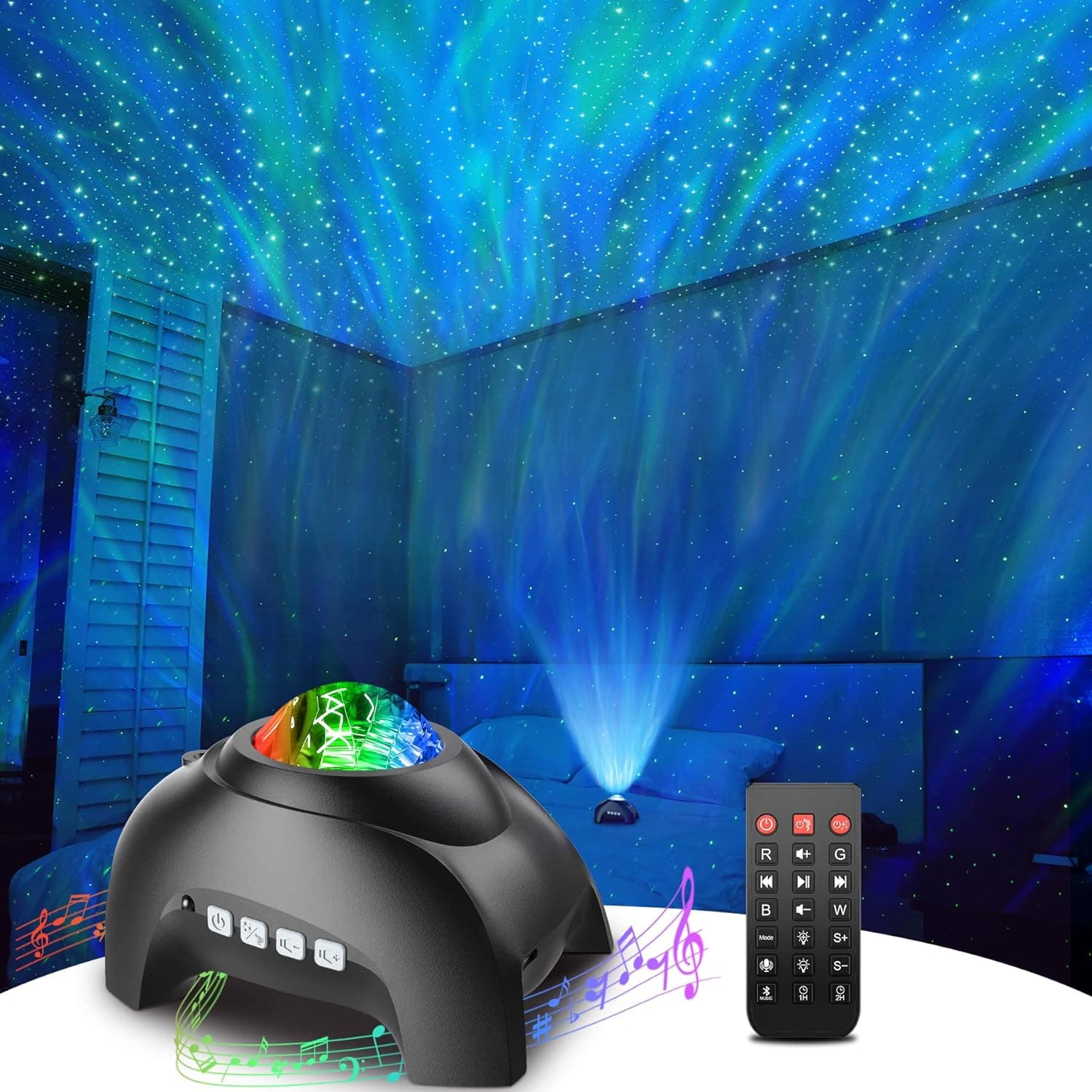
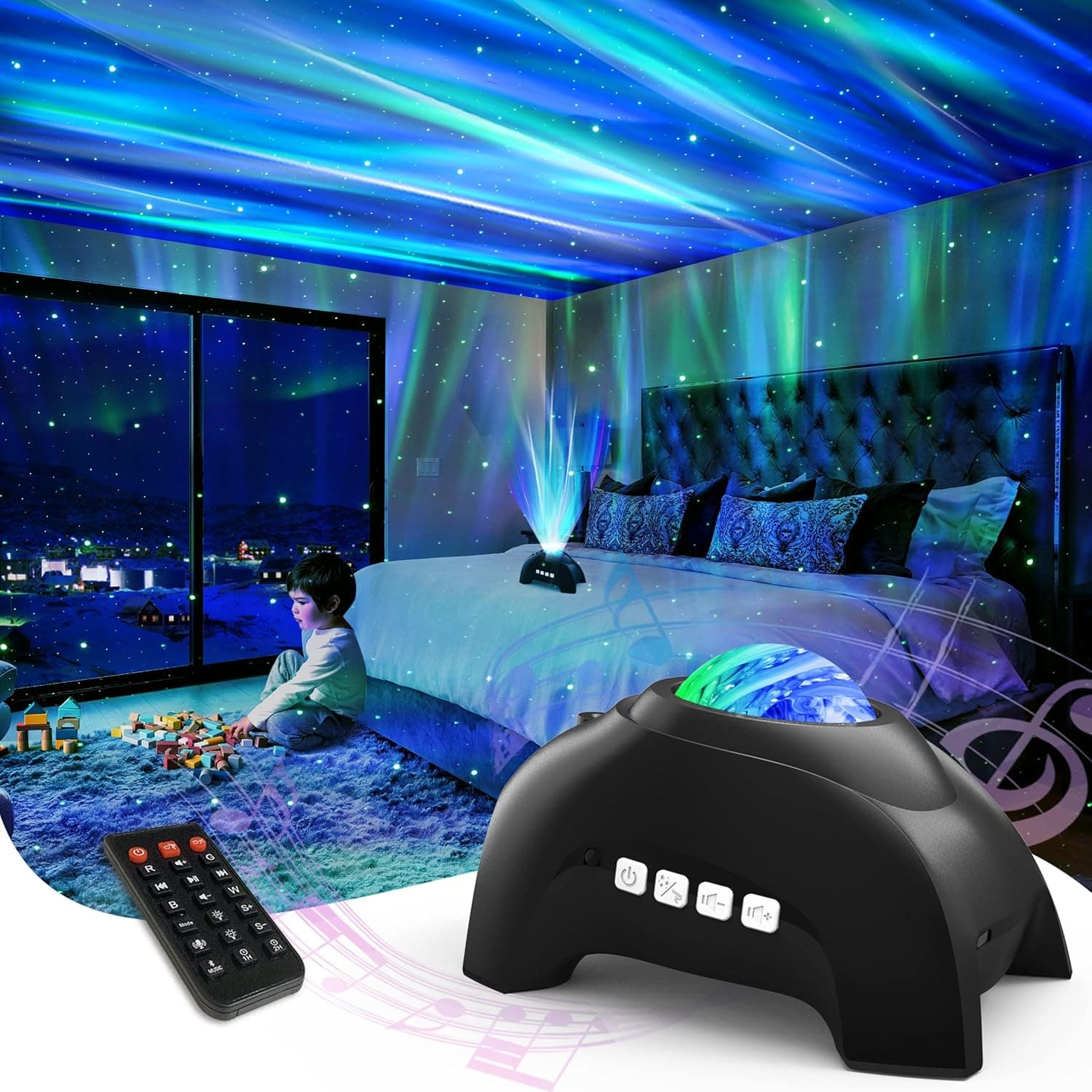
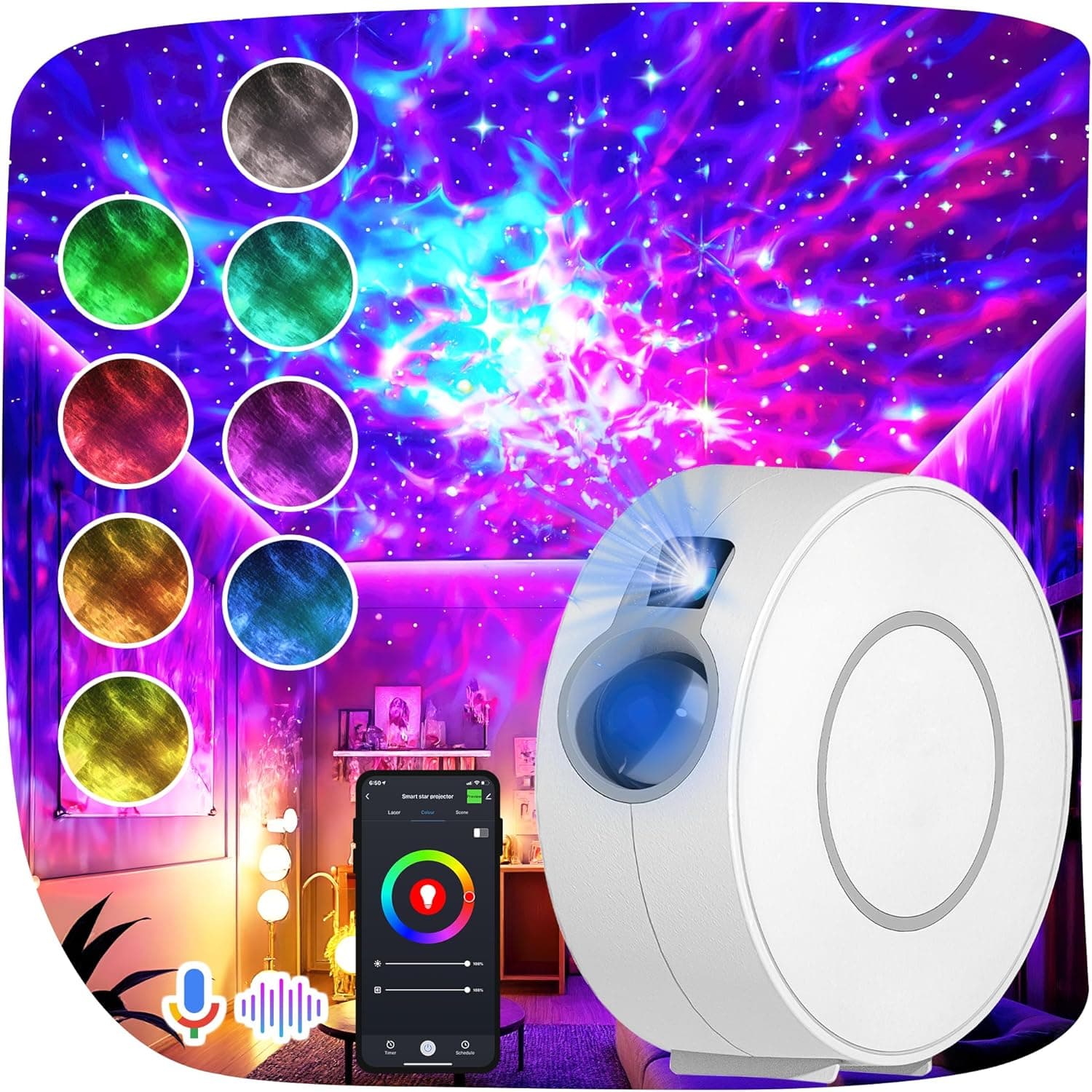
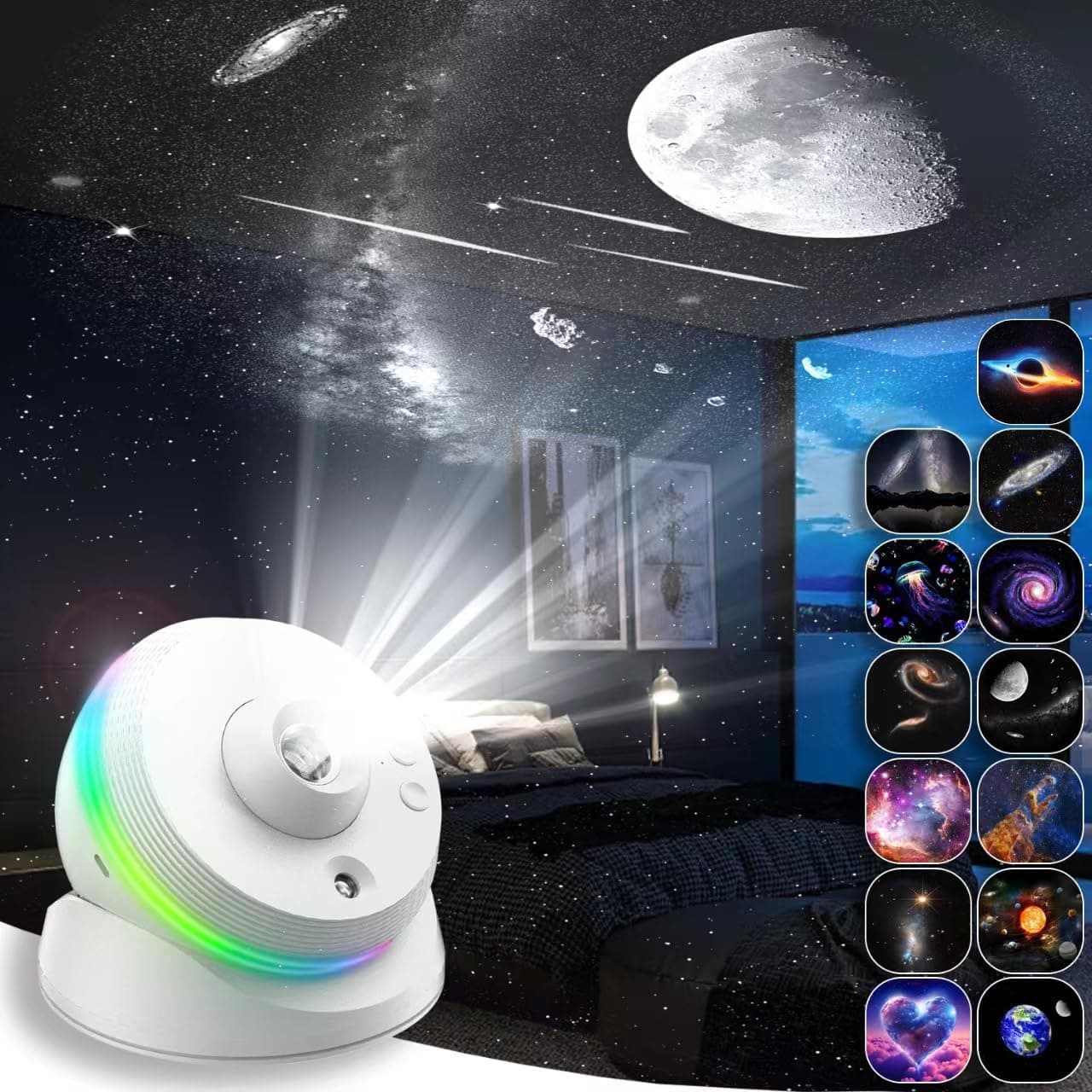
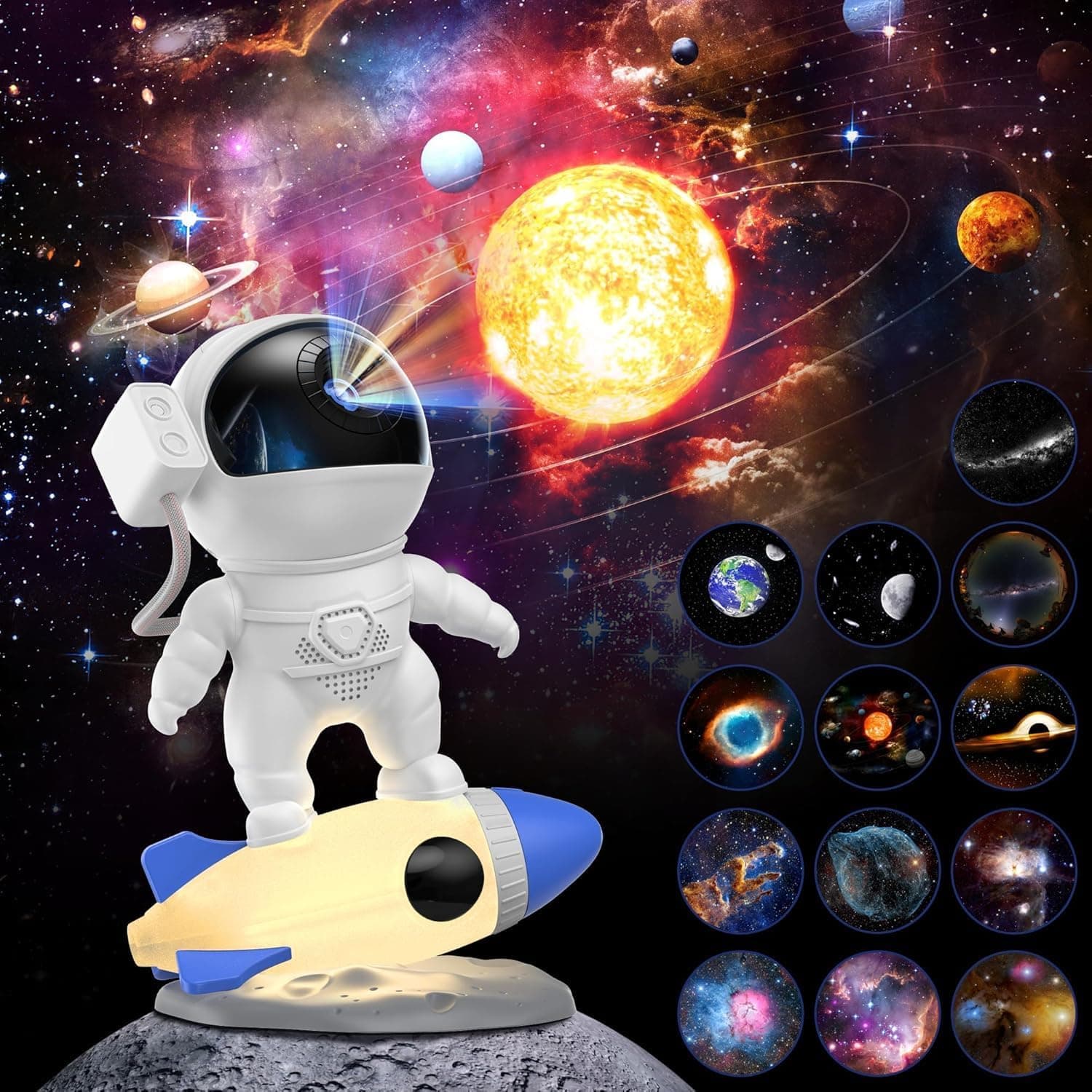
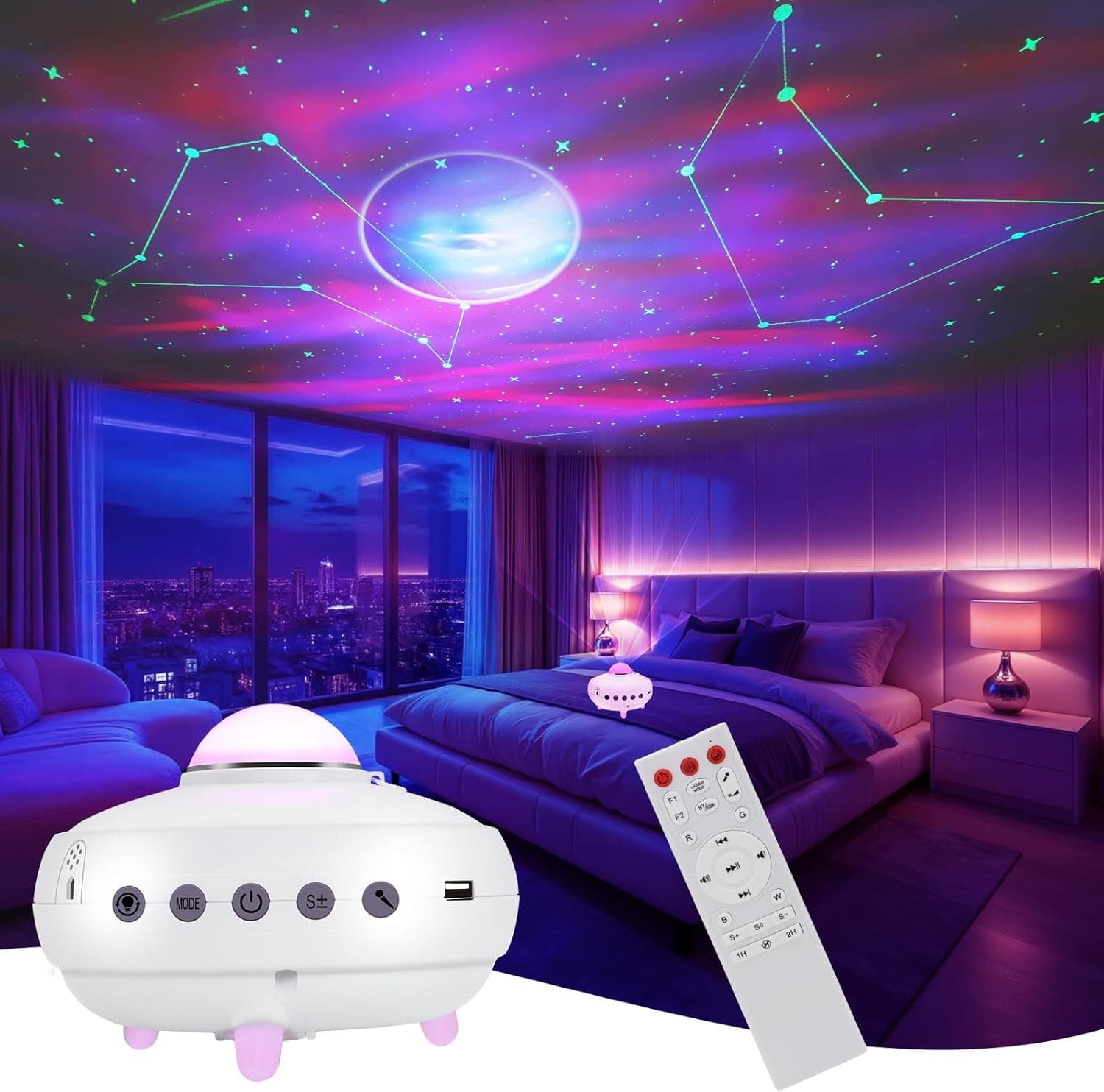
Galaxy projectors fall into two main categories. Nebula projectors use LEDs to cast flowing clouds of colored light and star dots across your ceiling and walls, creating an ambient atmosphere ideal for relaxation and mood lighting. Planetarium disc projectors use interchangeable optical film discs to project realistic images of galaxies, constellations, and planets with far greater detail. Nebula projectors like the BlissLights Sky Lite Evolve and Rossetta are better for ambient vibes and parties, while disc projectors like the POCOCO and Orzorz are better for realistic space imagery and educational use.
Laser star projectors like the BlissLights Sky Lite Evolve produce sharp, pinpoint stars that closely resemble a real night sky, while LED star projectors create softer, slightly blurry dots. If realistic star clarity matters to you, look for a projector that uses a laser diode for its star field. Laser projectors also tend to cover larger areas. However, laser-based units typically cost more and may not include built-in speakers or white noise features that are common on LED-based projectors. For most bedroom use cases, LED stars are perfectly adequate.
Galaxy projectors range from basic remote-control units to fully WiFi-connected devices with voice assistant integration. Smart projectors like the BlissLights Sky Lite Evolve and Encalife Atmosphere let you control colors, brightness, and scheduling through a phone app and integrate with Alexa or Google Assistant. Budget projectors rely on infrared remotes or manual buttons. If you want your galaxy projector to participate in smart home routines, such as turning on at sunset or dimming at bedtime, prioritize models with WiFi and voice assistant support.
Many galaxy projectors include built-in Bluetooth speakers and white noise machines, turning a simple light into a multi-sensory sleep or relaxation tool. The Rossetta and AIRIVO both offer Bluetooth speakers with 8 built-in white noise sounds, while the FLITI adds music-reactive light syncing. Speaker quality on galaxy projectors is generally adequate for ambient sounds and sleep playlists but should not be expected to replace a dedicated Bluetooth speaker. If audio is important to your use case, choose a projector with both Bluetooth and white noise built in.
Coverage area varies dramatically between galaxy projectors. Laser-based star fields like the BlissLights can cover up to 30 x 30 ft, filling even large living rooms, while disc-based planetarium projectors like the POCOCO and Orzorz project a focused image best suited for bedrooms with standard 8-10 ft ceilings. Nebula LED projectors like the FLITI fall somewhere in between, filling entire rooms with colored light but with less defined detail at greater distances. Measure your room and ceiling height before buying to ensure the projector you choose delivers optimal results in your space.
Galaxy projectors fall into three price tiers. Budget projectors under $30, like the Rossetta and the Aurora Lamp, provide colorful nebula effects and basic star fields suitable for casual bedroom use. Mid-range projectors from $35 to $55, including the FLITI, Orzorz, and BlissLights, offer significantly better optics, build quality, and features like WiFi or disc-based projection. Premium projectors from $55 to $100, such as the POCOCO and Encalife, deliver the sharpest visuals, best smart features, and most polished designs. For most people, the $35-55 mid-range offers the best balance of quality and value.

 1/5
1/5