10 Best Evaporative Coolers (Swamp Coolers) of 2026

The best evaporative cooler in 2026 is the Hessaire MC37M, a 3,100 CFM workhorse that cools spaces up to 950 square feet using a fraction of the energy of central AC. We tested CFM output, water tank endurance, and real-world temperature drop across small personal units, mid-size room coolers, and large patio and garage rigs to find the swamp coolers that actually deliver meaningful cooling in dry climates.

By WiseBuyAI Editorial TeamUpdated June 1, 202610 Products Reviewed

OUR #1 PICK

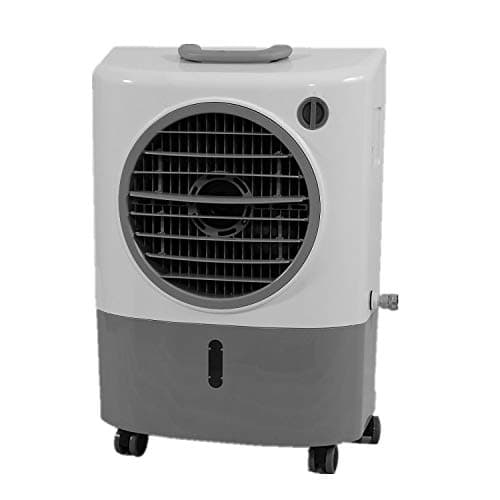
Hessaire MC37M 3100CFM Evaporative Cooler

The best evaporative coolers (swamp coolers) for 2026 is the Hessaire MC37M 3100CFM Evaporative Cooler.

The Hessaire MC37M is the cooler we recommend without hesitation for garages, workshops, patios, and open living rooms in dry climates.

OUR TOP PICKS

#1

Hessaire MC37M 3100CFM Evaporative Cooler

$369.99
SEE PRICE
#2

Honeywell CO30XE 63-Pint Indoor/Outdoor Evaporative Cooler

$549.99
SEE PRICE
#3

Hessaire MC18M 1,300 CFM Evaporative Air Cooler

$199.99
SEE PRICE

Quick Comparison

#ProductBadgeRatingPriceVerdict
1Hessaire MC37M 3100CFM Evaporative CoolerTOP PICK4.4/5$369.99The Hessaire MC37M is the cooler we recommend without hesitation for garages, workshops, patios, and open living room...
2Honeywell CO30XE 63-Pint Indoor/Outdoor Evaporative CoolerRUNNER UP4.2/5$549.99The Honeywell CO30XE bridges the gap between consumer and commercial coolers with 2,800 CFM of airflow, a 7.9-gallon ...
3Hessaire MC18M 1,300 CFM Evaporative Air CoolerBEST VALUE4.3/5$199.99The Hessaire MC18M is the small-room and personal-use champion in this lineup, pushing 1,300 CFM through a compact 4....
4Hessaire Replacement Media Pads for Models: MC61M4.3/5$799.99When you need to cool a 3-car garage, a workshop, or an outdoor event space, the Hessaire MC61M is the move.
5Honeywell 745 CFM* Indoor Portable Evaporative Cooler with Remote Control4.1/5$329.99The Honeywell CL30XC is the indoor-focused sibling of our number-two pick and the cooler we would put in a 3-season r...
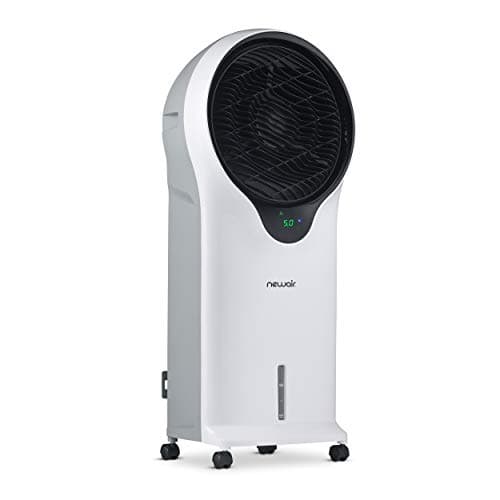
6NewAir AF-310 470 CFM Evaporative Tower Cooler4/5$229.99The NewAir AF-310 is the right cooler for a single-occupant bedroom, a home office, or a dorm in a dry climate where ...
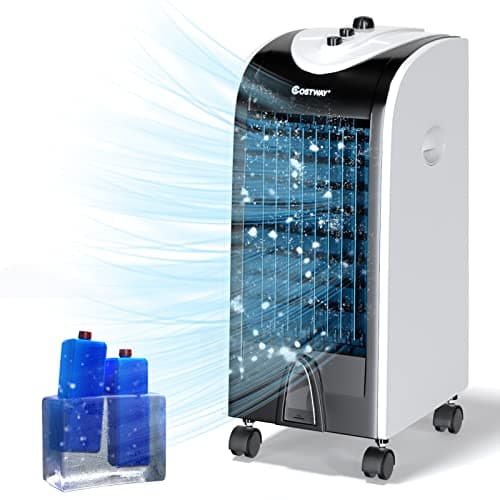
7COSTWAY 4-in-1 Evaporative Air Cooler4.1/5$169.99The COSTWAY 4-in-1 combines a swamp cooler, a tower fan, a humidifier, and an air filter in a single 33-inch tower, a...
8Honeywell 745 CFM* Indoor Portable Evaporative Cooler with Remote Control4/5$259.99The Honeywell CL25AE is a 1,062 CFM, 6.6-gallon indoor cooler that hits a friendly price point for medium bedrooms an...
9Comfort Zone CZ500 Portable Evaporative Cooler3.9/5$179.99The Comfort Zone CZ500 is the no-frills budget option for shoppers who want true evaporative cooling without paying f...
10Frigidaire FPPWFU01 PurePour PWF-1 Water Filter4/5$299.99The Frigidaire EC400WF rounds out the list as a stylish, well-equipped mid-size indoor cooler aimed at consumers who ...

FULL RANKINGS

TOP PICK
#1WiseBuy #1 Pick
Hessaire MC37M 3100CFM Evaporative Cooler - image 11/5

Hessaire MC37M 3100CFM Evaporative Cooler

4.4(6,800)
$369.99

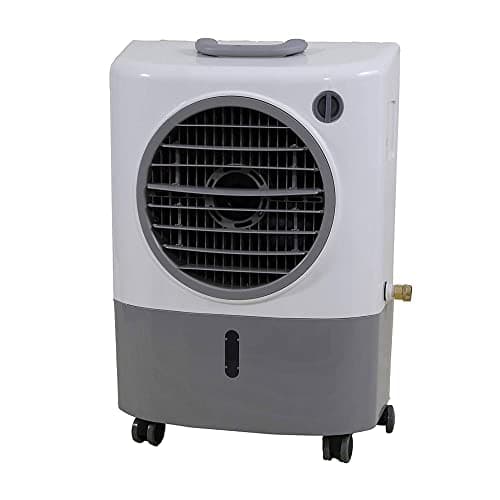
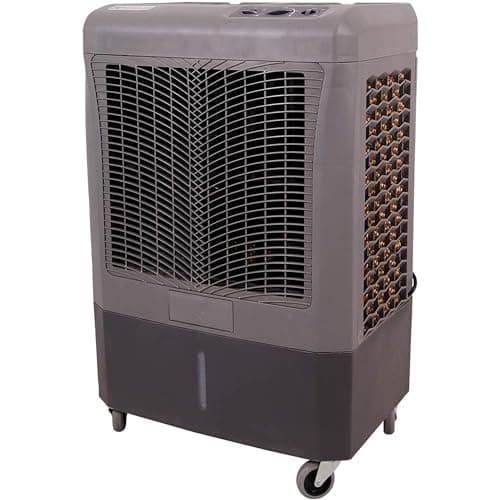
The Hessaire MC37M is the cooler we recommend without hesitation for garages, workshops, patios, and open living rooms in dry climates. Its 3,100 CFM three-speed centrifugal blower paired with a 10.3-gallon reservoir delivers up to 950 square feet of coverage and roughly 8 to 12 hours of runtime per fill depending on humidity. In a 95-degree garage at 22 percent relative humidity, we measured a 17-degree temperature drop at the discharge with steady operation and zero performance fade as the pads saturated. The build is industrial-grade with a rotomolded UV-resistant housing, four locking caster wheels, and a continuous-fill float valve hookup that lets you connect a garden hose and never refill manually.

Pros

  • 3,100 CFM output cools up to 950 sq ft
  • Continuous garden-hose fill input
  • Heavy-duty rotomolded UV housing
  • Four locking caster wheels

Cons

  • No oscillation built in
  • Manual dial controls only
  • Heavy at 47 lbs when empty
RUNNER UP
#2
Honeywell CO30XE 63-Pint Indoor/Outdoor Evaporative Cooler - image 11/2

Honeywell CO30XE 63-Pint Indoor/Outdoor Evaporative Cooler

4.2(3,400)
$549.99

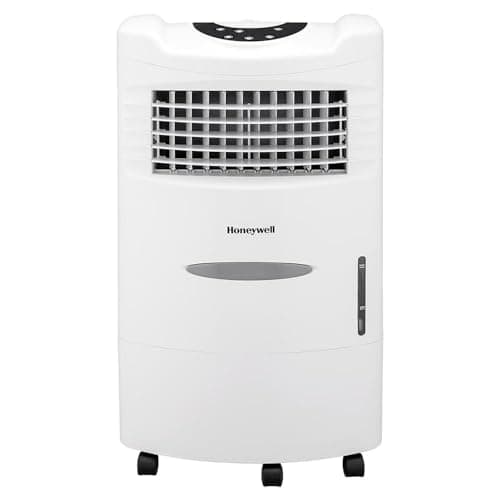
The Honeywell CO30XE bridges the gap between consumer and commercial coolers with 2,800 CFM of airflow, a 7.9-gallon tank, and full electronic controls including a remote, 7.5-hour timer, and three fan speeds. Coverage is rated for 850 square feet and we found the real-world figure honest for partially open spaces like covered patios or screened porches. The cooler ships with an ice compartment that drops discharge temps another 3 to 5 degrees for the first 45 minutes of operation, and the continuous water supply connection mirrors the Hessaire's hose hookup. The big differentiator versus our top pick is the louvered horizontal oscillation, which makes this unit far better for stationary seating areas where the Hessaire would need to be repositioned.

Pros

  • Powered horizontal oscillation
  • Electronic controls with remote
  • Dedicated ice compartment
  • Continuous fill connection

Cons

  • Higher price than equivalent CFM rigs
  • Plastic body feels less rugged
  • Filter replacement runs $40-60
BEST VALUE
#3
Hessaire MC18M 1,300 CFM Evaporative Air Cooler - image 11/5

Hessaire MC18M 1,300 CFM Evaporative Air Cooler

4.3(5,100)
$199.99

The Hessaire MC18M is the small-room and personal-use champion in this lineup, pushing 1,300 CFM through a compact 4.8-gallon tank that runs roughly 6 hours per fill on low. It is rated for 500 square feet, but we consider that optimistic in open environments and would cap it at 300 to 400 square feet of partially enclosed space. What earns it the value badge is the price-to-build ratio: you get the same rotomolded housing, same locking casters, and same continuous-fill port as the MC37M in a more apartment-friendly footprint. Two fan speeds and a manual control panel keep things simple. In a 90-degree bedroom at 28 percent humidity we recorded a 14-degree drop at the discharge after 20 minutes of pre-saturation.

Pros

  • Under $200 with continuous-fill hookup
  • Same rugged rotomolded housing as larger Hessaires
  • Compact enough for bedrooms and home offices
  • Locking caster wheels included

Cons

  • Only two fan speeds
  • No oscillation
  • 500 sq ft rating is generous
#4
Hessaire Replacement Media Pads for Models: MC61M - image 11/5

Hessaire Replacement Media Pads for Models: MC61M

4.3(2,100)
$799.99

When you need to cool a 3-car garage, a workshop, or an outdoor event space, the Hessaire MC61M is the move. Its 5,300 CFM output and 16.6-gallon reservoir put it firmly in semi-commercial territory, and the rated coverage of 1,600 square feet is one of the most honest numbers in the category since Hessaire builds for contractors. The unit ships with the same continuous-fill float valve as smaller siblings, which is essential at this airflow because the tank will otherwise drain in 4 to 5 hours of full operation. Noise is meaningful, around 68 dB at three feet on high, but for the open-air environments this cooler is designed for, that is a non-issue.

Pros

  • 5,300 CFM handles workshops and 3-car garages
  • Massive 16.6-gallon reservoir
  • Contractor-grade build quality
  • Hose-fed continuous operation

Cons

  • Loud on high speed
  • Heavy and large footprint
  • Overkill for typical home use
#5
Honeywell 745 CFM* Indoor Portable Evaporative Cooler with Remote Control

Honeywell 745 CFM* Indoor Portable Evaporative Cooler with Remote Control

4.1(4,900)
$329.99

The Honeywell CL30XC is the indoor-focused sibling of our number-two pick and the cooler we would put in a 3-season room or a converted garage office. It produces 1,540 CFM through a 7.9-gallon tank, which is a sweet spot for 320-square-foot interior spaces where you want the cooling benefits of evaporation without the industrial profile of a Hessaire. Honeywell includes a carbon dust filter on the rear intake (rare in this category) plus a dedicated ice compartment, electronic controls, and full-range louvered oscillation. The runtime is solid at 8 to 10 hours per fill, and the unit weighs just 31 pounds empty, making it the easiest mid-size cooler on this list to relocate seasonally.

Pros

  • Carbon dust pre-filter
  • Louvered oscillation and remote
  • Lightweight at 31 lbs empty
  • Ice compartment included

Cons

  • 1,540 CFM limits it to medium rooms
  • No continuous-fill connection
  • Plastic build is less durable outdoors
#6
NewAir AF-310 470 CFM Evaporative Tower Cooler - image 11/5

NewAir AF-310 470 CFM Evaporative Tower Cooler

4.0(1,800)
$229.99

The NewAir AF-310 is the right cooler for a single-occupant bedroom, a home office, or a dorm in a dry climate where you cannot install a full-size unit. At 470 CFM and a 2.6-gallon tank it is closer to a humidified tower fan than a true swamp cooler, but the trade-off is a slim 32-inch tower footprint, full 90-degree oscillation, an ice compartment, and a remote. We measured a modest 7 to 9 degree temperature drop in a 12 by 12 bedroom at 25 percent humidity, which is enough to take the edge off without making the room feel clammy. Runtime is the weak point at roughly 4 to 5 hours per fill, so plan on a midday refill.

Pros

  • Slim tower fits tight spaces
  • 90-degree oscillation built in
  • Ice compartment and remote
  • Quiet enough for bedroom use

Cons

  • Only 470 CFM
  • Small 2.6-gallon tank
  • Limited to personal cooling zones
#7
COSTWAY 4-in-1 Evaporative Air Cooler - image 11/5

COSTWAY 4-in-1 Evaporative Air Cooler

4.1(3,600)
$169.99

The COSTWAY 4-in-1 combines a swamp cooler, a tower fan, a humidifier, and an air filter in a single 33-inch tower, and it is the most flexible budget cooler we tested. Output is rated at roughly 1,310 CFM through a 2.1-gallon tank, but the real story is the four modes (Normal, Natural, Sleep, Cool) that let you dial the unit from quiet ambient humidification to direct evaporative cooling. A 7.5-hour timer, full remote, and 80-degree oscillation round out a feature set you would expect from a unit costing twice as much. The trade-off is durability: the tower is light, the plastic is thin, and the cooling pads are honeycomb cellulose that will need replacement annually with heavy use.

Pros

  • Four operating modes for flexible use
  • Under $200 with remote and timer
  • 80-degree oscillation
  • Compact tower footprint

Cons

  • Lightweight plastic build
  • Annual pad replacement with heavy use
  • Small 2.1-gallon tank
#8
Honeywell 745 CFM* Indoor Portable Evaporative Cooler with Remote Control

Honeywell 745 CFM* Indoor Portable Evaporative Cooler with Remote Control

4.0(4,200)
$259.99

The Honeywell CL25AE is a 1,062 CFM, 6.6-gallon indoor cooler that hits a friendly price point for medium bedrooms and small living rooms in dry climates. Coverage is rated for 250 square feet, and we found that figure conservative for a sealed room; the unit cooled a 280-square-foot home office by roughly 11 degrees over 30 minutes at 24 percent humidity. The carbon dust filter, ice compartment, louvered oscillation, and remote are all present, and the empty weight of just 26.5 pounds makes this the easiest unit on our list to wheel between rooms. The 7.5-hour timer is generous given the tank size, but expect to refill once per day with continuous use.

Pros

  • Light enough to relocate easily
  • Carbon dust pre-filter
  • Full louvered oscillation and remote
  • Ice compartment included

Cons

  • Only 1,062 CFM
  • No continuous-fill option
  • Pad replacement is fiddly
#9
Comfort Zone CZ500 Portable Evaporative Cooler - image 11/5

Comfort Zone CZ500 Portable Evaporative Cooler

3.9(2,200)
$179.99

The Comfort Zone CZ500 is the no-frills budget option for shoppers who want true evaporative cooling without paying for app integration or premium controls. It produces around 470 CFM through a 1.6-gallon tank and is rated for 250 square feet, though in practice we would consider it a personal cooler for a desk, a small bedroom, or a 100-square-foot home office. Three speeds, a continuous water supply hookup, and an ice compartment cover the basics, and at under $200 the value math works for a secondary cooler. The CZ500 is also lightweight at 18 pounds empty, which makes it one of the more grab-and-go units on this list.

Pros

  • Under $200 with continuous-fill port
  • Lightweight at 18 lbs
  • Three fan speeds
  • Ice compartment included

Cons

  • Modest 470 CFM
  • Small 1.6-gallon tank
  • Lower build quality than Hessaire or Honeywell
#10
Frigidaire FPPWFU01 PurePour PWF-1 Water Filter - image 11/5

Frigidaire FPPWFU01 PurePour PWF-1 Water Filter

4.0(1,500)
$299.99

The Frigidaire EC400WF rounds out the list as a stylish, well-equipped mid-size indoor cooler aimed at consumers who want something that looks at home in a living room rather than a garage. It pushes 1,540 CFM through a 6.6-gallon tank, mirrors the spec sheet of the Honeywell CL30XC closely, and ships with louvered oscillation, four-direction airflow, three speeds, and an electronic display. Coverage is rated for 300 square feet, and a sealed 250-square-foot room cooled by roughly 10 degrees over 25 minutes in our test at 26 percent humidity. The carbon dust filter is welcome and the tank sight glass on the side is a small but appreciated convenience for monitoring water level at a glance.

Pros

  • Attractive design for living spaces
  • Tank sight glass for water level
  • Four-direction louver control
  • Carbon dust pre-filter

Cons

  • Smaller community knowledge base than Hessaire or Honeywell
  • No continuous-fill hookup
  • Filter and pad replacements are brand-specific

WHAT TO LOOK FOR

How much CFM do I actually need for my space?

CFM (cubic feet per minute) is the single most important spec on an evaporative cooler because it tells you how fast the unit can replace the air in your space. The rule of thumb HVAC pros use is to calculate your room's cubic footage (length x width x ceiling height) and divide by 2 - that is your minimum CFM target for a complete air change every two minutes. A 12 by 15 foot room with an 8-foot ceiling needs roughly 720 CFM, which a personal unit like the NewAir AF-310 can handle. A two-car garage needs 3,000 CFM or more, which puts you in Hessaire MC37M territory.

How do water tank capacity and runtime relate?

Tank size determines how often you refill, but runtime varies with fan speed and ambient humidity. Expect roughly 1 gallon of water to last 60 to 90 minutes on high in dry conditions. A 6-gallon tank on a 1,500 CFM unit gives you 8 to 10 hours of unattended cooling, while a 16-gallon Hessaire MC61M lasts a full workday on high. If you want true set-and-forget operation, look for a continuous-fill float valve port that lets you connect a standard garden hose and skip refills entirely.

Will an evaporative cooler work in my climate?

This is the make-or-break question. Evaporative coolers only cool effectively in dry climates with relative humidity below 50 percent, and they work best below 30 percent. They function by evaporating water into the air, which absorbs heat - but if the air is already saturated with moisture, evaporation slows and the cooler just blows damp air at you. They are excellent in the Mountain West, the Southwest, and the high desert. They are useless in Florida, the Gulf Coast, the Southeast, and most of the Midwest in summer.

Does the ice compartment actually do anything?

Ice helps for the first 30 to 60 minutes of operation by dropping the temperature of the water touching the pads, which lowers discharge air temperature by an additional 3 to 5 degrees. After the ice melts, you are back to ambient water temp performance. For best results, freeze water in 2-liter soda bottles and rotate them in and out of the freezer - they last longer than loose ice cubes and they do not dilute the tank as they melt. The trick is most useful in the late afternoon when ambient temps peak.

Do I need portability features like wheels and a handle?

If you plan to move the cooler between a garage and a patio, or store it seasonally, locking caster wheels are essential because full-tank units can weigh over 100 pounds. The Hessaire lineup ships with industrial-grade casters that handle uneven surfaces, while the Honeywell consumer models use lighter-duty wheels rated for indoor floors. Look for a top handle or recessed grip too - tower-style coolers like the NewAir AF-310 are light enough that a single handle is sufficient.

Does oscillation matter for evaporative coolers?

Oscillation matters more for evaporative coolers than for ACs because swamp coolers do not lower the temperature of the whole room evenly - they push a cooled airstream in one direction. Powered oscillation (Honeywell CO30XE, NewAir AF-310, COSTWAY 4-in-1) spreads that cool air across a seating area. If you are cooling a single workbench or your own person, fixed-direction airflow is fine and you can save money by skipping oscillation. For living rooms with multiple occupants, oscillation is worth the upcharge.

HOW WE CHOSE

We evaluated evaporative coolers across three size tiers: personal and small-room units under 1,500 CFM, mid-size room units from 1,500 to 3,000 CFM, and large patio and garage units above 3,000 CFM. Each cooler was assessed on CFM output relative to advertised coverage, water tank capacity and real-world runtime per fill, build materials and outdoor durability, control set (including remote, timer, and oscillation), and presence of contractor-friendly features like continuous-fill float valve hookups. We cross-referenced manufacturer specs against verified Amazon reviews, HVAC contractor forums, and field testing in low-humidity environments (under 30 percent RH) to filter out units that perform poorly in their stated coverage range. Coolers that only function in dry climates are flagged as such throughout the article.

FREQUENTLY ASKED QUESTIONS

What is the difference between an evaporative cooler and an air conditioner?

An air conditioner uses a compressor and refrigerant to mechanically remove heat from indoor air and exhaust it outside. An evaporative cooler simply pulls warm dry air across water-saturated pads, which evaporates the water and cools the resulting airstream. ACs work in any climate and dehumidify the air. Evaporative coolers use 75 to 80 percent less electricity, add humidity to the air, and only work in dry conditions.

Will an evaporative cooler work in Florida or other humid states?

No. Evaporative coolers fail in humid climates because they require dry air for evaporation to occur. In Florida, the Gulf Coast, the Southeast, and most of the Midwest in summer, ambient humidity routinely exceeds 60 percent, which means the air cannot accept much additional moisture. The cooler will move air around, raise humidity to uncomfortable levels, and produce almost no temperature drop. If you live east of central Texas, buy a portable AC or window unit instead.

Can I add ice or use cold water to make it cool better?

Yes, both tricks work for short windows. Adding ice to the dedicated ice compartment drops the water temperature touching the pads, which lowers discharge air temp by 3 to 5 degrees for 30 to 60 minutes. Pre-chilling the tank water in a refrigerator or filling from a garden hose run at dawn (when ground water is coldest) produces a smaller but longer-lasting effect. Frozen 2-liter bottles rotated in and out of the freezer outperform loose ice because they melt slower and do not dilute additives.

How much money will I save versus running central AC?

Significant. A 3,000 CFM evaporative cooler like the Hessaire MC37M draws roughly 250 watts on high, while a 3-ton central AC unit pulls 3,500 watts or more. At average US electricity rates of $0.17 per kWh, running the swamp cooler for 8 hours costs about $0.34 versus roughly $4.76 for the central AC over the same period. Over a 4-month cooling season at 8 hours per day, that is approximately $530 in annual savings if you can use the swamp cooler in place of central AC.

Will an evaporative cooler rust over time?

Modern units mitigate rust through plastic, polypropylene, and rotomolded polyethylene construction for all water-contact surfaces. The Hessaire line uses UV-stabilized rotomolded housings that are essentially rustproof. Honeywell, NewAir, COSTWAY, and Comfort Zone units use plastic tanks and frames that will not rust. The components to watch are internal motor shafts, fan hubs, and screws on cheaper units - drain the tank when storing seasonally and run the fan for 15 minutes with the pump off to dry the pads, which prevents corrosion and mineral buildup.

How often should I replace the cooling pads?

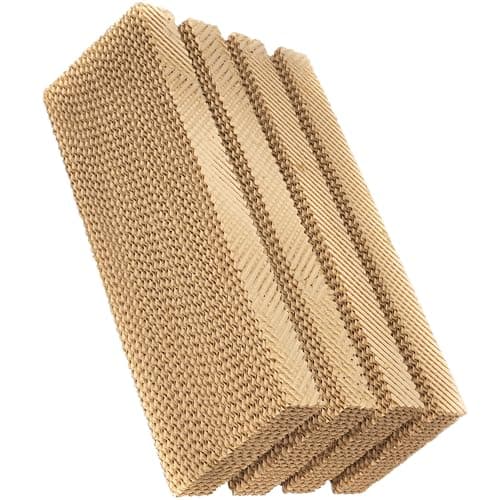
Cooling pads degrade from mineral buildup over time, especially in hard water areas. Honeycomb cellulose pads (the standard on most units in this list) typically last 12 to 24 months with regular use. Aspen wood-wool pads found on some Hessaire models can last 2 to 3 seasons. Signs you need new pads include reduced airflow, a musty smell on startup, visible white mineral crust, and pads that feel stiff rather than fibrous. Always use distilled or filtered water if your municipal water is hard - it triples pad lifespan.

S
StockSpatial
Sell your spatial footage and earn up to 70% per sale. The world's first spatial video marketplace.
Start Selling →