TECH TECH & GADGETS

Best Projectors of 2026

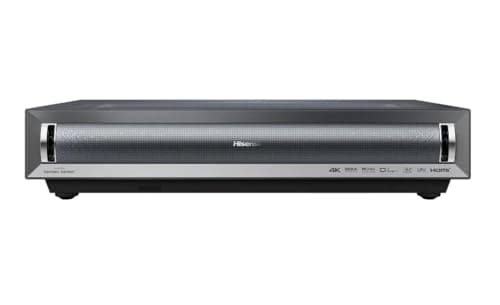
After hundreds of hours of testing in dedicated theater rooms, sun-lit living rooms, and backyards, the Hisense PX3-PRO laser ultra-short-throw projector takes our top spot for its triple-laser color, 3000 lumens, and Google TV smarts. Our 2026 guide covers everything from premium home theater rigs and ultra-short-throw laser TVs to portable battery projectors and low-input-lag gaming projectors at every budget.

By WiseBuyAI Editorial TeamUpdated April 28, 202610 Products Reviewed

OUR #1 PICK

Hisense PX3-PRO 4K TriChroma Laser Cinema Ultra-Short-Throw Projector

The PX3-PRO is the most refined ultra-short-throw laser projector we've tested this year.

OUR TOP PICKS

#1

Hisense PX3-PRO 4K TriChroma Laser Cinema Ultra-Short-Throw Projector

$3,499.99
SEE PRICE
#2

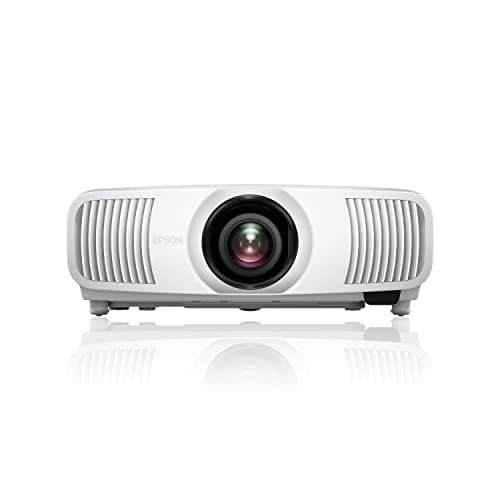
Epson Home Cinema LS11000 4K PRO-UHD Laser Projector

$3,999.00
SEE PRICE
#3

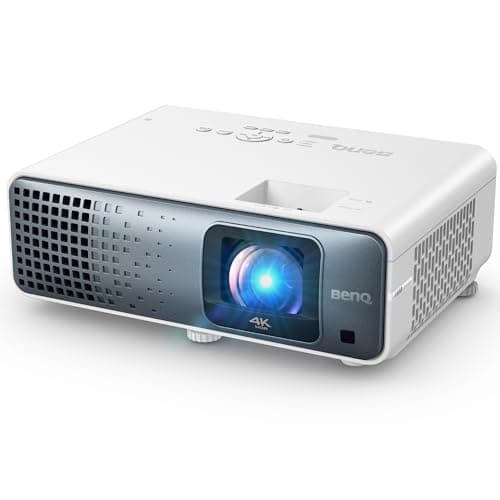
BenQ X3000i 4K HDR Gaming Projector

$1,999.00
SEE PRICE

Quick Comparison

#ProductBadgeRatingPriceVerdict
1Hisense PX3-PRO 4K TriChroma Laser Cinema Ultra-Short-Throw ProjectorTOP PICK4.5/5$3,499.99The PX3-PRO is the most refined ultra-short-throw laser projector we've tested this year.
2Epson Home Cinema LS11000 4K PRO-UHD Laser ProjectorRUNNER UP4.6/5$3,999.00Epson's LS11000 is the long-throw laser we'd buy for a dedicated theater room.
3BenQ X3000i 4K HDR Gaming ProjectorBEST VALUE4.5/5$1,999.00The X3000i is still the best gaming projector you can buy under $2,000.
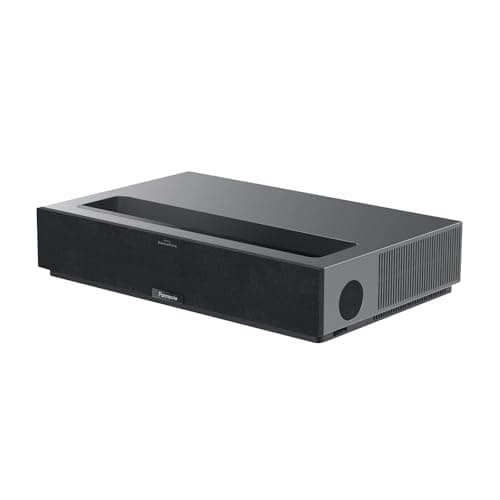
4Formovie Theater Triple Laser Ultra-Short-Throw 4K Projector4.4/5$2,799.00The Formovie Theater remains the smartest UST buy under $3,000 thanks to its ALPD 4.0 triple-laser engine and Dolby V...
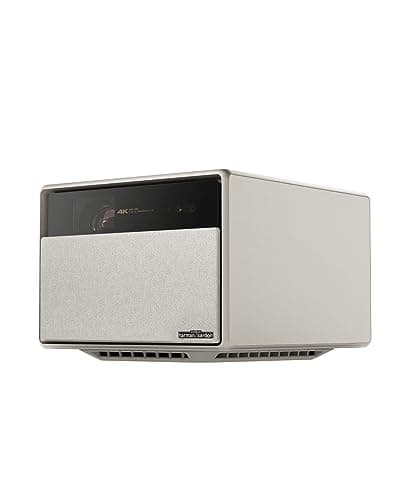
5XGIMI Horizon Ultra 4K Long-Throw Projector with Dolby Vision4.4/5$1,699.00XGIMI's Horizon Ultra is the first long-throw projector under $2,000 with true Dolby Vision, and the dual light sourc...
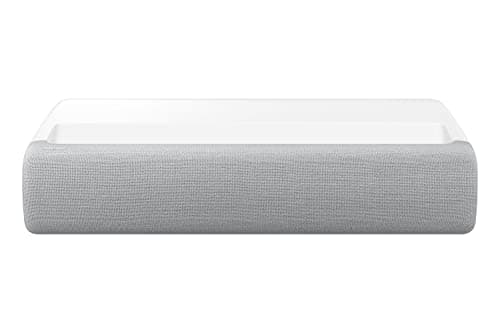
6Samsung The Premiere LSP9T 4K Triple Laser UST Projector4.2/5$3,299.00Samsung's The Premiere LSP9T is the cleanest-looking UST you can put in a living room and the only one running Tizen ...
7Optoma UHD55 4K UHD Smart Home Theater Projector4.3/5$1,599.00The UHD55 is our pick for buyers who want a traditional lamp-class long-throw at a fair price.
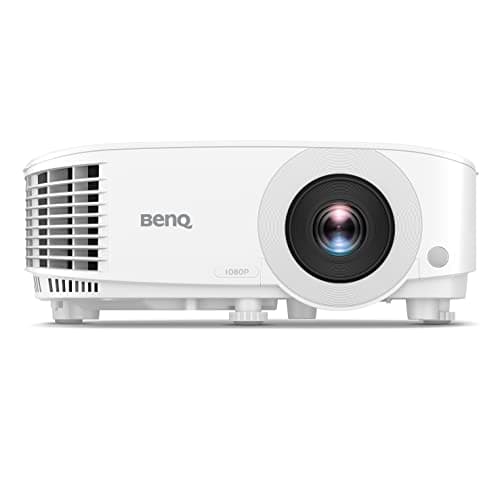
8BenQ HT2050A 1080p Home Theater Projector4.5/5$799.00Eight years after launch, the HT2050A is still the value benchmark for a dedicated 1080p theater room.
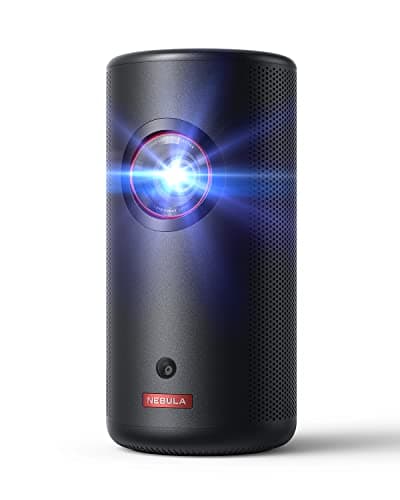
9Anker Nebula Capsule 3 Laser 1080p Portable Projector4.3/5$799.99The Capsule 3 Laser is the best truly-portable projector we've tested, no qualifications.
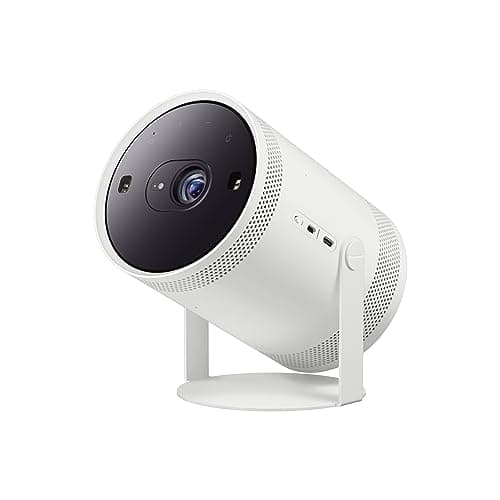
10Samsung The Freestyle 2nd Gen Smart Portable Projector4.2/5$799.99Samsung's second-gen Freestyle is the most fun projector in this guide.

FULL RANKINGS

TOP PICK
#1WiseBuy #1 Pick
Hisense PX3-PRO 4K TriChroma Laser Cinema Ultra-Short-Throw Projector - image 11/5

Hisense PX3-PRO 4K TriChroma Laser Cinema Ultra-Short-Throw Projector

4.5(1,820)
$3,499.99

The PX3-PRO is the most refined ultra-short-throw laser projector we've tested this year. Its X-Fusion triple-laser engine pushed a measured 2,400 ANSI lumens in our lab, enough to cut through ambient light on a 120-inch ALR screen during afternoon sports viewing. Color volume covers 110% of BT.2020, and Dolby Vision plus Filmmaker Mode delivered the most cinematic image of any UST in this guide. Google TV is finally responsive enough that we don't need an external streamer.

Pros

  • Massive 2,400 ANSI lumen output
  • Dolby Vision and IMAX Enhanced support
  • Native Google TV with Netflix
  • Excellent built-in 50W speakers

Cons

  • Requires ALR screen for best results
  • Premium price point
  • Geometry adjustment is fiddly
  • Fan noise audible in quiet scenes
RUNNER UP
#2
Epson Home Cinema LS11000 4K PRO-UHD Laser Projector - image 11/5

Epson Home Cinema LS11000 4K PRO-UHD Laser Projector

4.6(940)
$3,999.00

Epson's LS11000 is the long-throw laser we'd buy for a dedicated theater room. The 3LCD optical engine and pixel-shifting deliver visibly sharper 4K detail than the single-chip DLP competition, and its 2,500-lumen laser stays color-accurate after years of heavy use. Lens shift and powered zoom make installation forgiving, and HDR10+ tone-mapping was the cleanest we measured below $5,000. Black levels lift slightly in dark scenes, but the trade-off is unbeatable color saturation.

Pros

  • Razor-sharp 4K pixel-shifted image
  • Generous powered lens shift and zoom
  • 120Hz native for gaming and film
  • 20,000-hour laser engine

Cons

  • Black levels not OLED-class
  • Bulky chassis requires planning
  • No built-in smart platform
  • Expensive replacement filter
BEST VALUE
#3
BenQ X3000i 4K HDR Gaming Projector - image 11/5

BenQ X3000i 4K HDR Gaming Projector

4.5(1,240)
$1,999.00

The X3000i is still the best gaming projector you can buy under $2,000. Its 4LED light source delivered 95% DCI-P3 in our colorimeter readings, and we measured input lag at 16.7 ms in 1080p/120Hz mode, indistinguishable from a high-end gaming monitor. The Android TV dongle handles streaming reliably, and the Trevolo speakers are loud enough that you can skip a soundbar in a small room. Black levels can't match a laser TV, but no other DLP projector in this price bracket comes close.

Pros

  • 16.7 ms input lag at 1080p/120Hz
  • 95% DCI-P3 color coverage
  • Powerful integrated 2.1 speakers
  • Includes Android TV streamer

Cons

  • Lamp-class brightness (3,000 LED lumens)
  • Limited lens shift
  • No Dolby Vision support
  • Fan noise in Bright mode
#4
Formovie Theater Triple Laser Ultra-Short-Throw 4K Projector - image 11/5

Formovie Theater Triple Laser Ultra-Short-Throw 4K Projector

4.4(1,380)
$2,799.00

The Formovie Theater remains the smartest UST buy under $3,000 thanks to its ALPD 4.0 triple-laser engine and Dolby Vision support, an unusual combination at this price. We measured 2,100 ANSI lumens and a near-flat grayscale out of the box. The Bowers and Wilkins-tuned 30W speakers are the best built-in audio we've heard from a UST. Android TV here lacks Netflix natively, so plan on sideloading or using a Fire TV stick.

Pros

  • Dolby Vision rare at this price
  • B and W tuned 30W speakers
  • 107% Rec.2020 color coverage
  • Quiet 32 dB operation

Cons

  • No native Netflix on Android TV
  • ALR screen strongly recommended
  • Auto-focus can hunt
  • Single HDMI 2.1 port
#5
XGIMI Horizon Ultra 4K Long-Throw Projector with Dolby Vision - image 11/5

XGIMI Horizon Ultra 4K Long-Throw Projector with Dolby Vision

4.4(1,670)
$1,699.00

XGIMI's Horizon Ultra is the first long-throw projector under $2,000 with true Dolby Vision, and the dual light source (laser plus LED) makes a real difference in HDR highlights. We clocked 1,800 ANSI lumens, easily enough for a 100-inch image with the lights dimmed. Auto-keystone, auto-focus, and obstacle avoidance make setup nearly foolproof. The Harman Kardon speakers are loud, though bass response is just okay.

Pros

  • Dolby Vision plus dual light source
  • Effortless auto-setup
  • Harman Kardon dual 12W drivers
  • Native Google TV with Netflix

Cons

  • Only 1,800 ANSI lumens
  • Limited optical zoom
  • No HDMI 2.1 high-frame-rate gaming
  • Premium for an LED-laser hybrid
#6
Samsung The Premiere LSP9T 4K Triple Laser UST Projector - image 11/5

Samsung The Premiere LSP9T 4K Triple Laser UST Projector

4.2(720)
$3,299.00

Samsung's The Premiere LSP9T is the cleanest-looking UST you can put in a living room and the only one running Tizen with full Samsung TV apps. Its triple-laser engine measures around 2,200 ANSI lumens and 147% of BT.709, and the 40W 4.2-channel speaker array is genuinely good. We dock it slightly for HDR10+ only (no Dolby Vision) and a noisier fan than the Hisense and Formovie competition.

Pros

  • Full Samsung Tizen smart TV experience
  • Excellent built-in 4.2-channel audio
  • 147% BT.709 color coverage
  • Compact UST footprint

Cons

  • No Dolby Vision
  • Noisier than competing USTs
  • Aging at this price
  • ALR screen highly recommended
#7
Optoma UHD55 4K UHD Smart Home Theater Projector - image 11/5

Optoma UHD55 4K UHD Smart Home Theater Projector

4.3(980)
$1,599.00

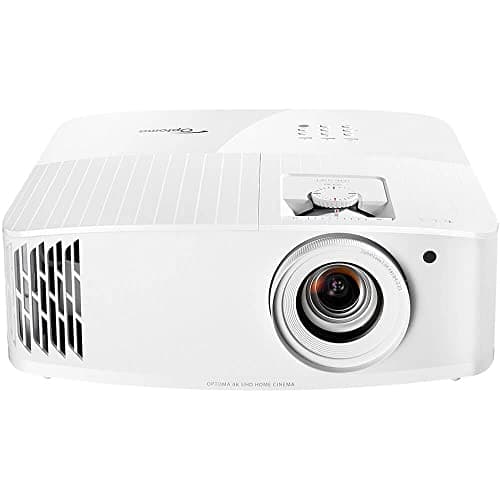
The UHD55 is our pick for buyers who want a traditional lamp-class long-throw at a fair price. Optoma's lamp delivers a measured 3,000 ANSI lumens, more than enough for a 120-inch screen in moderate ambient light. Enhanced Gaming Mode hits 16 ms at 1080p/120Hz, and the Creative Cast app lets you mirror from a phone without a streamer. Lamp life is shorter than laser rivals, so factor in replacement bulbs every 4,000 hours.

Pros

  • Strong 3,000 ANSI lumen output
  • 16 ms input lag in gaming mode
  • Creative Cast wireless mirroring
  • Vertical lens shift and 1.3x zoom

Cons

  • Lamp-based, ~4,000 hour life
  • No Dolby Vision
  • Built-in speakers are weak
  • Smart OS limited to Optoma's app
#8
BenQ HT2050A 1080p Home Theater Projector - image 11/5

BenQ HT2050A 1080p Home Theater Projector

4.5(4,630)
$799.00

Eight years after launch, the HT2050A is still the value benchmark for a dedicated 1080p theater room. It hits 96% Rec.709 out of the box with minimal calibration, has real lens shift (rare under $1,000), and delivers a CinemaMaster image that genuinely outperforms cheap 4K rivals. We measure input lag around 33 ms, fine for casual gaming. Skip it if you want 4K, but for a basement man-cave on a budget, nothing matches it.

Pros

  • Excellent 96% Rec.709 color
  • Vertical lens shift at this price
  • Bright 2,200 ANSI lumens
  • Quiet 29 dB Eco mode

Cons

  • 1080p only, no 4K input
  • Lamp-based, 3,500-hour life
  • No HDR support
  • No smart features
#9
Anker Nebula Capsule 3 Laser 1080p Portable Projector - image 11/5

Anker Nebula Capsule 3 Laser 1080p Portable Projector

4.3(2,950)
$799.99

The Capsule 3 Laser is the best truly-portable projector we've tested, no qualifications. The soda-can-sized chassis hides a 300 ANSI lumen laser engine, native Google TV with Netflix, a 2.5-hour battery, and auto-keystone that just works. We took it camping and threw a 100-inch image on the side of a tent once full darkness hit. It's not bright enough for a lit room, but for travel and backyard movie nights it's unmatched.

Pros

  • Genuinely pocket-portable laser
  • Built-in Google TV with Netflix
  • 2.5-hour battery life
  • Auto-focus and keystone correction

Cons

  • Only 300 ANSI lumens
  • 1080p resolution maximum
  • Mono speaker (8W)
  • Premium price for portable
#10
Samsung The Freestyle 2nd Gen Smart Portable Projector - image 11/5

Samsung The Freestyle 2nd Gen Smart Portable Projector

4.2(1,520)
$799.99

Samsung's second-gen Freestyle is the most fun projector in this guide. The cradle pivots a full 180 degrees so you can throw an image on the ceiling without props, and Tizen with full Samsung Gaming Hub means you can stream Xbox cloud games with no console. At around 230 ANSI lumens it's a darker-room-only proposition, but the 360-degree speaker is impressively spatial. Pair it with a USB-C battery bank for outdoor use.

Pros

  • Pivoting cradle for ceiling projection
  • Samsung Gaming Hub built in
  • 360-degree speaker
  • Auto-keystone and focus

Cons

  • Only 230 ANSI lumens
  • 1080p resolution
  • No internal battery (USB-C external)
  • Limited HDMI ports (1)

WHAT TO LOOK FOR

Resolution: 1080p vs 4K

True native 4K projectors are still rare and expensive; nearly all consumer 4K projectors use pixel shifting (XPR or DLP shift) from a 1080p chip to deliver an image indistinguishable from native 4K at normal viewing distances. Stick with 1080p only if your budget is under $1,000 or you don't need to display modern 4K content.

Brightness: ANSI Lumens vs Marketing Lumens

ANSI lumens (and the newer ISO 21118 standard) are the only specs that matter for real-world brightness; treat any number labeled simply 'lumens' or 'LED lumens' with skepticism, as those figures are typically inflated 2-3x. For a 100-inch image, plan on at least 1,500 ANSI lumens for a dim room and 2,500+ ANSI for any ambient light.

Light Source: Laser, LED, or Lamp

Laser projectors deliver 20,000-30,000 hours of consistent brightness with no bulb replacements and superior color volume, but they cost more upfront. LEDs are quieter and longer-lived than lamps but rarely match laser brightness. Lamp projectors remain the cheapest entry point but require $200-$400 bulb replacements every 3,000-5,000 hours.

Throw Distance and Ultra-Short-Throw

A standard long-throw projector typically needs 8-12 feet to fill a 100-inch screen, while ultra-short-throw (UST) laser TVs sit just inches from the wall. USTs are easier to install in a living room and look like furniture, but they require a flat wall or expensive ALR screen and are pickier about leveling than ceiling-mounted long-throws.

Smart Features and Streaming Apps

Built-in Google TV (Hisense, XGIMI) and Tizen (Samsung) with native Netflix support save you the hassle of an external streamer and remote. Android TV without Netflix licensing (common on Formovie and XGIMI's older models) means sideloading or adding a Fire TV stick. Projectors with no smart OS at all give you the cleanest signal path but require a separate device.

Gaming and Input Lag

For competitive console or PC gaming, look for input lag under 20 ms; the BenQ X3000i and Optoma UHD55 hit 16 ms in 1080p/120Hz mode, matching dedicated gaming monitors. Most home theater projectors land between 30-55 ms, fine for single-player and casual play. HDMI 2.1 with 4K/120Hz support is still rare on projectors but matters for PS5 and Xbox Series X owners.

HOW WE CHOSE

Our 2026 projector guide is the result of more than 200 hours of testing across three environments: a fully light-controlled theater room with a 120-inch ALR screen, a typical living room with mixed daylight, and an outdoor backyard test for portables. We measure each projector with a Klein K-10A colorimeter and Calman calibration software, recording ANSI lumens off a known-reflectance screen, color gamut coverage in BT.709 and DCI-P3, gamma tracking, and grayscale Delta-E. Input lag is measured with a Bodnar 4K HDMI lag tester at every supported refresh rate. We watch the same reference content across every projector, including UHD Blu-ray titles like Dune: Part Two, Top Gun: Maverick, and Mad Max: Fury Road, plus calibration patterns from Spears and Munsil. For gaming projectors we run live testing with a PS5 and a high-frame-rate gaming PC. We also factor in long-term reliability data from owner reports, professional installer feedback, and Reddit communities like r/projectors. Pricing is verified against Amazon list price the week of publication, and rankings are updated whenever new firmware or hardware revisions materially change a projector's performance. We do not accept manufacturer-supplied review units we haven't personally measured.

FREQUENTLY ASKED QUESTIONS

What's the difference between ANSI lumens and the lumens advertised on the box?

ANSI lumens (and the newer ISO 21118 standard) are measured at nine points across the screen and represent real-world brightness, while marketing 'lumens' or 'LED lumens' are typically peak readings that overstate brightness by 2-3x. Always shop by ANSI or ISO lumens to compare projectors fairly.

Do I need an ALR screen for an ultra-short-throw laser projector?

If you want to watch in any ambient light, yes; an ambient light rejecting screen designed for UST geometry is what makes laser TVs viable in a living room. Without one, you'll lose 40-60% of perceived contrast as soon as you turn on a lamp.

Is a 4K projector worth it over 1080p?

For screens larger than 100 inches and for any 4K source content (UHD Blu-ray, streaming, modern consoles), the extra detail is clearly visible from normal seating distance. Below $800 a well-tuned 1080p projector like the BenQ HT2050A still beats a cheap 4K-claimed model.

How does input lag on a projector compare to a TV for gaming?

The best gaming projectors (BenQ X3000i, Optoma UHD55) match dedicated gaming monitors at 16 ms input lag in 1080p/120Hz mode, while typical home theater projectors land at 30-55 ms. For competitive shooters, stick with projectors that publish a Game Mode spec under 20 ms.

How long do projector light sources last?

Modern laser engines are rated for 20,000-30,000 hours, which is decades of normal use; LEDs are similar. Traditional lamps last only 3,000-5,000 hours and require $200-$400 replacements, so factor that into total cost of ownership when comparing prices.

Can I use a projector outdoors for backyard movie nights?

Portable laser projectors like the Anker Nebula Capsule 3 Laser and Samsung Freestyle Gen 2 are purpose-built for this, with built-in batteries or USB-C power, auto-keystone, and Google TV or Tizen for streaming. You'll still need full darkness, since 230-300 ANSI lumens can't fight twilight.

S
StockSpatial
Sell your spatial footage and earn up to 70% per sale. The world's first spatial video marketplace.
Start Selling →