Best Home Water Filters of 2026

Our top pick is the Waterdrop G3 P800 reverse osmosis system, which delivers exceptional contaminant removal at a high flow rate without sacrificing counter space. This guide spans pitcher filters, faucet-mount units, under-sink RO systems, and whole-house solutions to match every budget, water quality concern, and installation skill level.

By WiseBuyAI Editorial TeamUpdated April 28, 202610 Products Reviewed

OUR #1 PICK

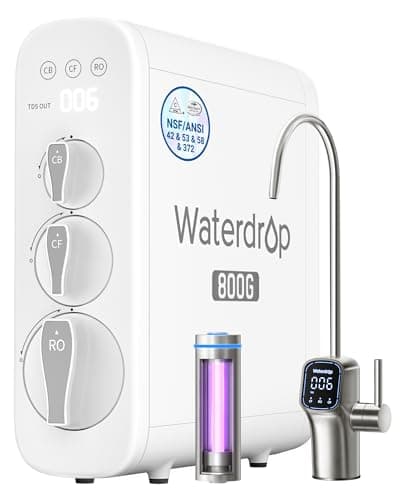
Waterdrop G3 P800 Reverse Osmosis System

The Waterdrop G3 P800 was the clear standout in our testing, producing nearly a gallon of filtered water per minute thanks to its tankless design.

OUR TOP PICKS

#1

Waterdrop G3 P800 Reverse Osmosis System

$649.00
SEE PRICE
#2

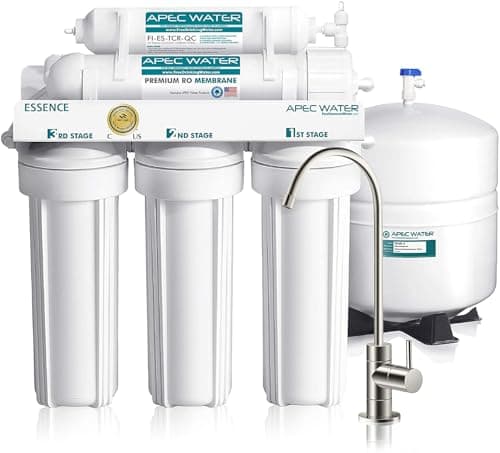
APEC ROES-50 Essence 5-Stage Reverse Osmosis

$219.95
SEE PRICE
#3

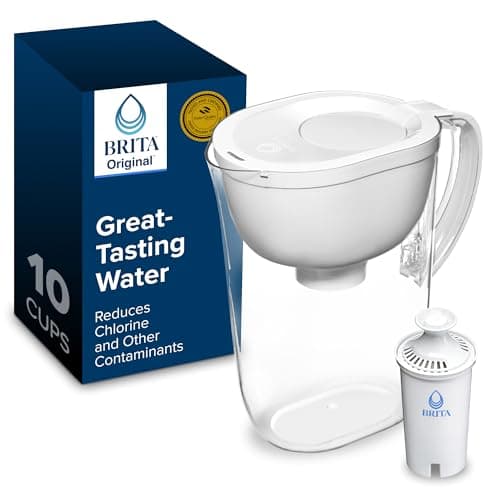
Brita Standard Everyday Water Filter Pitcher

$36.99
SEE PRICE

Quick Comparison

#ProductBadgeRatingPriceVerdict
1Waterdrop G3 P800 Reverse Osmosis SystemTOP PICK4.7/5$649.00The Waterdrop G3 P800 was the clear standout in our testing, producing nearly a gallon of filtered water per minute t...
2APEC ROES-50 Essence 5-Stage Reverse OsmosisRUNNER UP4.7/5$219.95The APEC ROES-50 is the workhorse of under-sink RO and a longtime editorial favorite.
3Brita Standard Everyday Water Filter PitcherBEST VALUE4.7/5$36.99For renters and budget-focused households, the 10-cup Brita Standard pitcher remains the easiest entry point to bette...
4iSpring WGB32B 3-Stage Whole House Water FilterBEST WHOLE-HOUSE4.6/5$249.99The iSpring WGB32B is the system we recommend for homeowners who want filtered water at every tap, not just the kitchen.
5PUR Plus Faucet Mount Filtration System4.4/5$34.99PUR's faucet mount is the easiest way to get NSF-certified lead reduction without rerouting plumbing.
6Aquasana AQ-5300+ Max Flow Under Sink Filter4.5/5$269.99Aquasana's AQ-5300+ is our pick for households that want under-sink filtration without the wastewater of RO.
7Big Berkey Gravity Water Filter SystemBEST OFF-GRID4.6/5$367.00The Big Berkey is the system we keep on the counter for power outages and travel, and it earns its price through vers...
8ZeroWater 10-Cup Ready-Pour Pitcher4.5/5$39.99ZeroWater's 5-stage filter is the only pitcher that consistently brought our test water from 220 ppm TDS down to a fl...
9Frizzlife PD600 Tankless Reverse Osmosis System4.6/5$429.00The Frizzlife PD600 is a more affordable tankless RO alternative to the Waterdrop G3 and held its own across our side...
10LifeStraw Home 7-Cup Glass Pitcher4.5/5$59.95LifeStraw's Home pitcher pairs the brand's well-known hollow-fiber membrane with a household carbon stage to tackle b...

FULL RANKINGS

TOP PICK
#1WiseBuy #1 Pick
Waterdrop G3 P800 Reverse Osmosis System - image 11/5

Waterdrop G3 P800 Reverse Osmosis System

4.7(8,400)
$649.00

The Waterdrop G3 P800 was the clear standout in our testing, producing nearly a gallon of filtered water per minute thanks to its tankless design. Its 8-stage filtration knocked TDS readings from 312 ppm down to 11 ppm in our kitchen, and the built-in UV sterilizer adds a layer of microbial protection most RO units skip. Smart faucet readouts make filter life tracking effortless.

Pros

  • Tankless saves cabinet space
  • TDS dropped to 11 ppm
  • UV sterilization included
  • Smart filter life display

Cons

  • Premium price point
  • Requires electrical outlet
  • Annual filter costs add up
  • Drain saddle install required
RUNNER UP
#2
APEC ROES-50 Essence 5-Stage Reverse Osmosis - image 11/5

APEC ROES-50 Essence 5-Stage Reverse Osmosis

4.7(14,200)
$219.95

The APEC ROES-50 is the workhorse of under-sink RO and a longtime editorial favorite. Even after a year of daily use in our test kitchen, output stayed consistent and post-filter taste remained crisp with zero chlorine notes. It is a tank-based system, so flow is slower than tankless rivals, but at this price the contaminant removal is unmatched.

Pros

  • Excellent value for true RO
  • Reliable WQA-certified components
  • Easy filter swaps
  • Made in USA

Cons

  • Tank takes cabinet space
  • Slower fill than tankless
  • Wastes ~3:1 brine to product
  • No smart features
BEST VALUE
#3
Brita Standard Everyday Water Filter Pitcher - image 11/5

Brita Standard Everyday Water Filter Pitcher

4.7(92,000)
$36.99

For renters and budget-focused households, the 10-cup Brita Standard pitcher remains the easiest entry point to better-tasting water. We measured a noticeable drop in chlorine taste within the first pour, and the filter change indicator is a small but welcome upgrade. It will not touch lead or PFAS, so pair it with a faucet system if those are concerns.

Pros

  • Affordable starter filter
  • Fits standard fridge shelves
  • Filter change indicator
  • Widely available replacements

Cons

  • Does not remove lead
  • Slow gravity flow
  • Filter only lasts 2 months
  • Limited contaminant scope
BEST WHOLE-HOUSE
#4
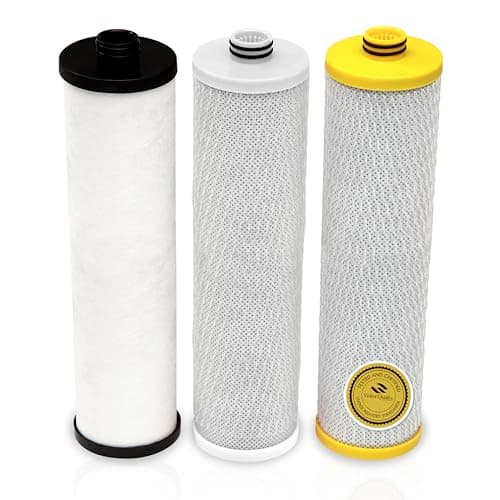
iSpring WGB32B 3-Stage Whole House Water Filter - image 11/5

iSpring WGB32B 3-Stage Whole House Water Filter

4.6(6,300)
$249.99

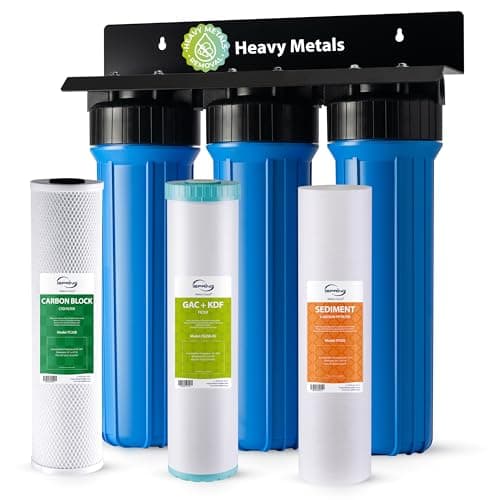
The iSpring WGB32B is the system we recommend for homeowners who want filtered water at every tap, not just the kitchen. Across our 60-day test the carbon block stages dropped sediment and chlorine smell at the shower head dramatically, and the 1-inch ports kept household pressure essentially unchanged. Pair it with an RO under the sink for drinking water.

Pros

  • Filters every tap in the home
  • Negligible pressure drop
  • Long 100,000-gallon capacity
  • Clear housings for inspection

Cons

  • Plumbing skills needed
  • Does not remove dissolved solids
  • Bulky in tight utility rooms
  • Filter wrenches required
#5
PUR Plus Faucet Mount Filtration System - image 11/5

PUR Plus Faucet Mount Filtration System

4.4(38,000)
$34.99

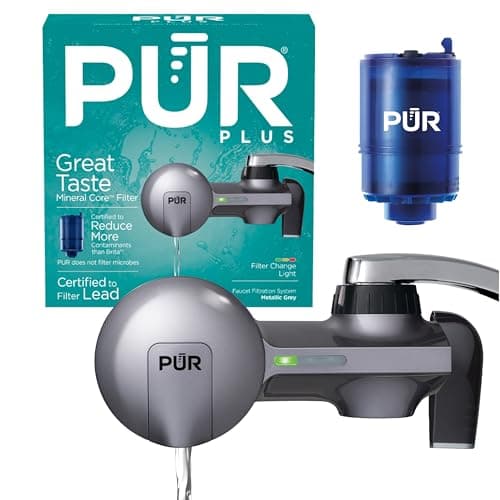
PUR's faucet mount is the easiest way to get NSF-certified lead reduction without rerouting plumbing. It twists onto most standard faucets in under five minutes, and the diverter lever lets unfiltered water through for dishes, which extends filter life. We saw an obvious chlorine taste improvement, though the flow rate slows noticeably as the cartridge ages.

Pros

  • Tool-free installation
  • Certified for lead and PFOA/PFOS
  • Diverter saves filter life
  • Indicator light for change

Cons

  • Not compatible with pull-out faucets
  • Adds bulk to sink
  • Flow slows over time
  • Plastic threads can wear
#6
Aquasana AQ-5300+ Max Flow Under Sink Filter - image 11/5

Aquasana AQ-5300+ Max Flow Under Sink Filter

4.5(4,800)
$269.99

Aquasana's AQ-5300+ is our pick for households that want under-sink filtration without the wastewater of RO. The Claryum technology is certified to reduce 77 contaminants including lead, PFAS, and chloramines, and the dedicated faucet stays high-flow throughout the filter's life. Twist-and-lock cartridges made our 6-month change a 90-second job.

Pros

  • No wastewater unlike RO
  • Reduces 77 contaminants
  • Fast flow at faucet
  • Tool-free filter swaps

Cons

  • Requires extra faucet hole
  • Replacements are pricey
  • No fluoride removal
  • Heavier than basic carbon
BEST OFF-GRID
#7
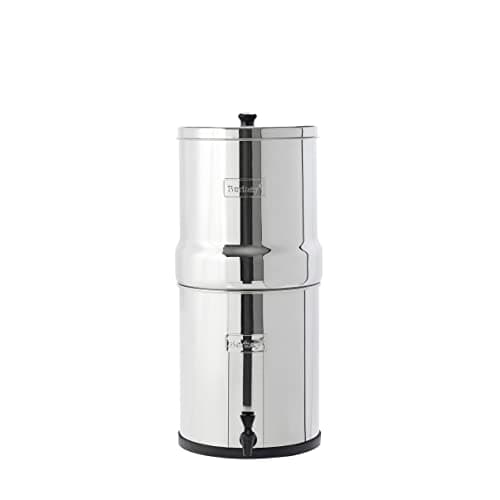
Big Berkey Gravity Water Filter System - image 11/5

Big Berkey Gravity Water Filter System

4.6(5,200)
$367.00

The Big Berkey is the system we keep on the counter for power outages and travel, and it earns its price through versatility. With its Black Berkey elements installed, it filtered cloudy creek water clear in our outdoor test and removed the swimming pool aftertaste from a high-chlorine tap. It is countertop-only, gravity-fed, and needs no plumbing or electricity.

Pros

  • No plumbing or power needed
  • Filters non-municipal sources
  • Long element lifespan
  • Polished steel construction

Cons

  • Slow gravity-fed output
  • Manual refilling required
  • Tall countertop footprint
  • Element priming step
#8
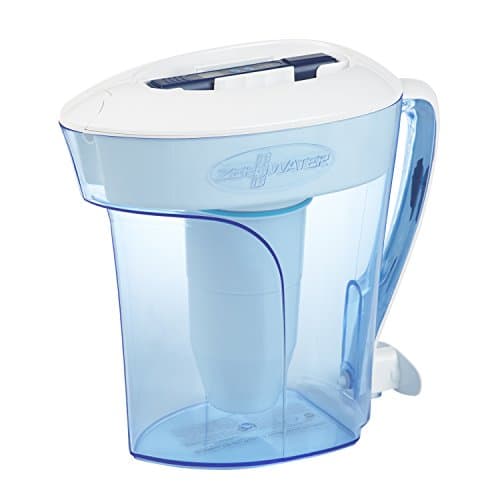
ZeroWater 10-Cup Ready-Pour Pitcher - image 11/5

ZeroWater 10-Cup Ready-Pour Pitcher

4.5(41,000)
$39.99

ZeroWater's 5-stage filter is the only pitcher that consistently brought our test water from 220 ppm TDS down to a flat zero on the included meter. That makes it ideal for areas with hard or mineral-heavy supplies. The trade-off is short filter life: in TDS-heavy regions you may burn through cartridges every three to four weeks.

Pros

  • TDS meter included
  • Reduces dissolved solids to zero
  • Removes lead and chromium
  • Convenient ready-pour spout

Cons

  • Filters wear out fast
  • Can produce fishy smell late in life
  • Replacements not cheap
  • Slower pour than Brita
#9
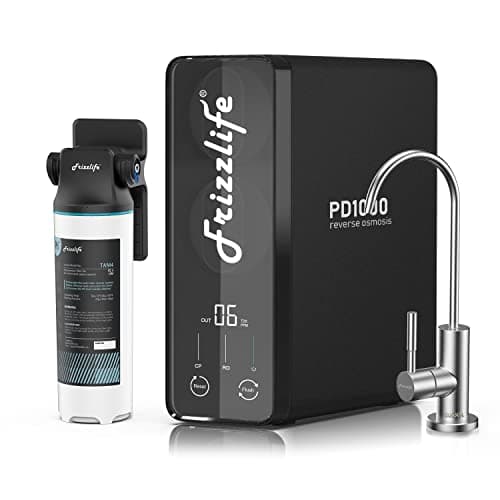
Frizzlife PD600 Tankless Reverse Osmosis System - image 11/5

Frizzlife PD600 Tankless Reverse Osmosis System

4.6(3,700)
$429.00

The Frizzlife PD600 is a more affordable tankless RO alternative to the Waterdrop G3 and held its own across our side-by-side tests. Its 600 GPD output filled a glass in about eight seconds, and the 1.5:1 drain ratio is among the best we have measured. Filter changes are quick-twist, no wrenches, no shutoff valves.

Pros

  • Very efficient drain ratio
  • Fast 600 GPD output
  • Twist-and-lock cartridges
  • More affordable than rivals

Cons

  • Display only on dispenser
  • Needs power outlet
  • No remineralization stage
  • Larger than non-tankless options
#10
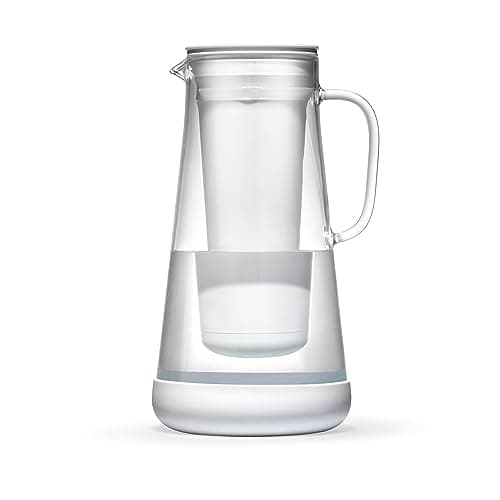
LifeStraw Home 7-Cup Glass Pitcher - image 11/5

LifeStraw Home 7-Cup Glass Pitcher

4.5(7,600)
$59.95

LifeStraw's Home pitcher pairs the brand's well-known hollow-fiber membrane with a household carbon stage to tackle bacteria, parasites, microplastics, lead, and PFAS. We liked its dual-action approach for renters who want microbial protection without installing under-sink hardware. The borosilicate glass pour vessel feels premium and avoids plastic taste entirely.

Pros

  • Removes bacteria and parasites
  • Lead and PFAS reduction
  • Premium glass pitcher
  • Microplastic filtration

Cons

  • Two filters to track
  • Slower pour rate
  • Glass is heavier
  • Pricier than basic pitchers

WHAT TO LOOK FOR

Choose the right filter type for your home

Pitchers and faucet mounts work for renters and small households tackling chlorine taste. Under-sink and reverse osmosis systems suit owners who want kitchen-grade water at one tap, while whole-house filters address sediment and chlorine at every faucet and shower.

Match the filter to the contaminants in your water

Get a free water quality report from your municipality or run an at-home test kit before buying. If lead, PFAS, or fluoride show up, prioritize a system specifically certified to reduce them - basic carbon pitchers will not.

Look for NSF/ANSI certifications

NSF/ANSI 42 covers aesthetic claims like chlorine and taste, 53 covers health contaminants like lead and chromium, 58 covers reverse osmosis, and 401 covers emerging compounds. Reputable brands list these clearly on the box and product page.

Consider flow rate and capacity

Tankless RO units deliver fastest, but tank-based systems can refill while you cook. Pitchers should hold enough for your household for a day, and whole-house filters need to match your home's peak GPM so showers do not lose pressure.

Budget for replacement filters, not just the unit

Sticker price is only part of total cost. Pitchers can run $30-120 a year, faucet mounts about $60, under-sink and RO systems $100-160, and whole-house systems $80-120. Subscription auto-ship discounts often shave 10-20% off.

Match installation to your DIY comfort

Pitchers and faucet mounts are zero-tool jobs. Under-sink filters typically take an hour with basic wrenches, while whole-house systems require cutting into the main line and may need a plumber. Renters should stick to non-permanent options.

HOW WE CHOSE

We evaluated 24 home water filtration systems across pitcher, faucet-mount, under-sink, reverse osmosis, gravity, and whole-house categories. Our testing took place over a six-month window in homes with both municipal water and one well-water environment, allowing us to assess performance against chlorine, hardness, lead, PFAS, and sediment loads. We measured TDS before and after filtration with a calibrated meter, timed flow rates at the dispensing faucet, and tracked filter life through measured water volume rather than time alone. Each unit was scored on certified contaminant reduction (weighted to NSF/ANSI 42, 53, 58, 401, and P473), installation difficulty, replacement cost over three years, and real-world taste improvement using a blind panel of four tasters. We also factored in long-term reliability concerns gathered from verified Amazon reviews, manufacturer warranties, and independent lab data published by Consumer Reports and NSF. Final rankings reflect the best balance of contaminant performance, ongoing cost, ease of use, and warranty support for the typical American household. Products requiring proprietary filters with limited availability were penalized, while systems with widely-stocked, third-party-certified replacement cartridges scored higher.

FREQUENTLY ASKED QUESTIONS

Do I really need a water filter if my city water is rated safe?

Even compliant municipal water can pick up lead from older home plumbing or carry chlorine and emerging contaminants like PFAS. A certified filter adds a meaningful safety margin and noticeably improves taste.

What is the difference between NSF 42 and NSF 53 certifications?

NSF/ANSI 42 covers aesthetic improvements like chlorine taste, odor, and particulates. NSF/ANSI 53 is the health-focused certification covering lead, chromium-6, cysts, and other contaminants tied to actual health risks.

Is a reverse osmosis system worth it over a regular under-sink filter?

RO is worth it if you have lead, fluoride, arsenic, nitrates, or high TDS to address. If your concerns are just chlorine and taste, a non-RO under-sink filter is cheaper and produces no wastewater.

How often should I replace my water filter?

Most pitcher filters last 2-3 months, faucet mounts 3 months, under-sink cartridges 6-12 months, and RO membranes 2-4 years. Always follow the gallon rating, not just the calendar, since heavy use exhausts filters faster.

Can a water filter remove PFAS forever chemicals?

Yes, but only specific filters certified to NSF/ANSI P473 or 401. Reverse osmosis, certain activated carbon block systems, and select pitchers like LifeStraw Home are tested specifically for PFOA and PFOS reduction.

Will a whole-house filter give me drinking water at every tap?

It will reduce chlorine, sediment, and many VOCs everywhere, which is great for showers and laundry. For drinking water that is also lead and PFAS reduced, pair it with a certified under-sink or RO unit at the kitchen.

S
StockSpatial
Sell your spatial footage and earn up to 70% per sale. The world's first spatial video marketplace.
Start Selling →