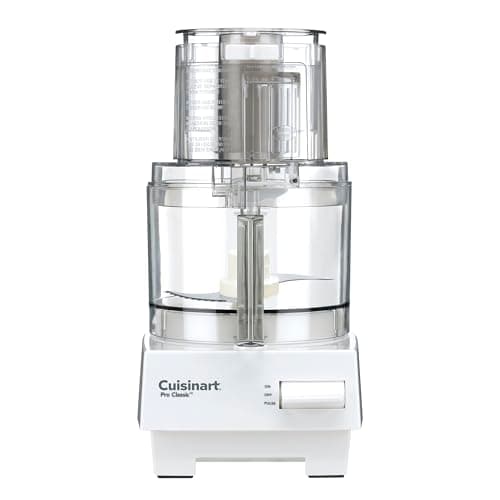
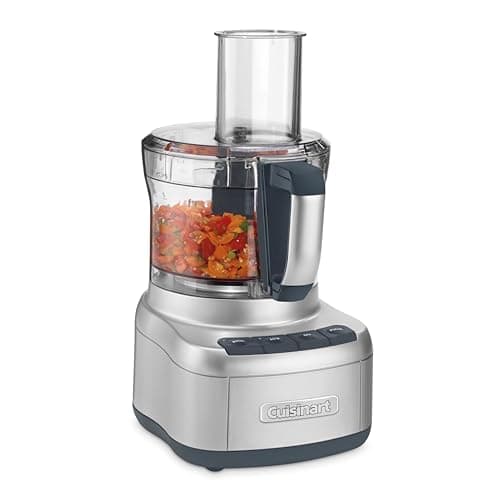
For most households, a 14-cup food processor is the sweet spot - it handles everything from weeknight meal prep to holiday entertaining without feeling oversized for smaller tasks. If you're cooking for 1-2 people or have limited counter space, a 7-8 cup model like the Cuisinart Pro Classic provides plenty of capacity for everyday use. Only go smaller than 7 cups if you exclusively make dips and sauces, and only go larger than 14 cups if you regularly cook for crowds.
Absolutely - food processors and blenders serve fundamentally different purposes. Blenders excel at liquids: smoothies, soups, and sauces. Food processors excel at solids: chopping vegetables, shredding cheese, slicing potatoes, kneading dough, and making pie crust. If you try to chop onions in a blender, you'll get mush at the bottom and chunks at the top. A food processor gives you even, controlled processing of solid ingredients that blenders simply can't replicate.
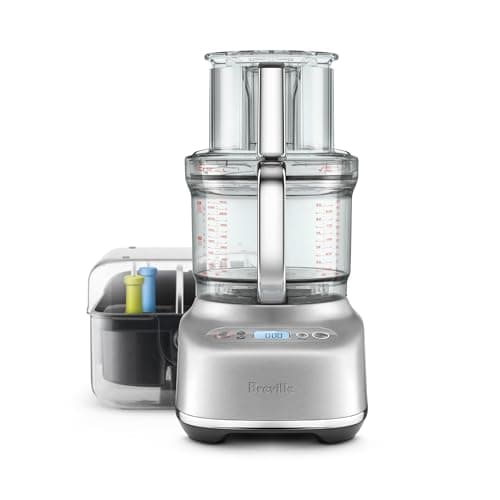
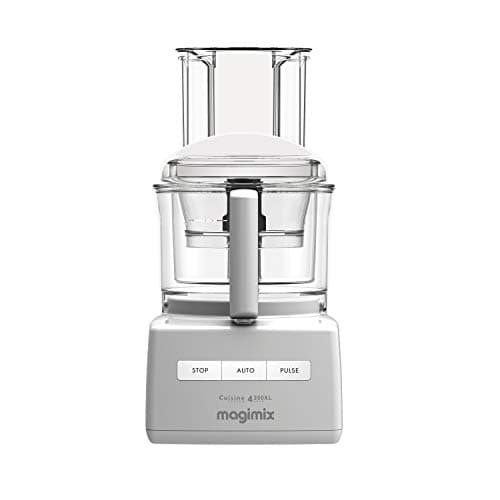
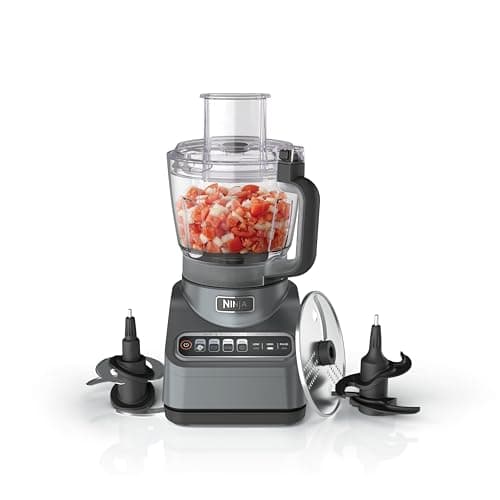
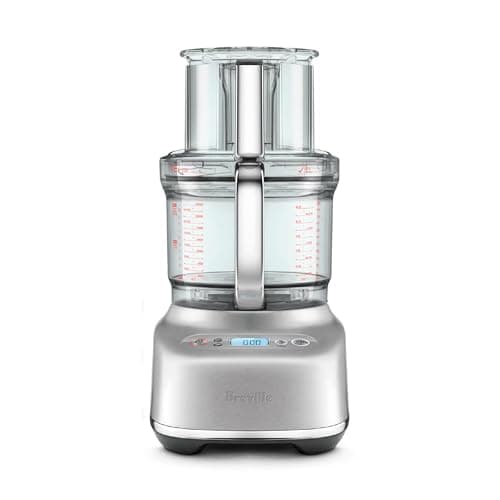
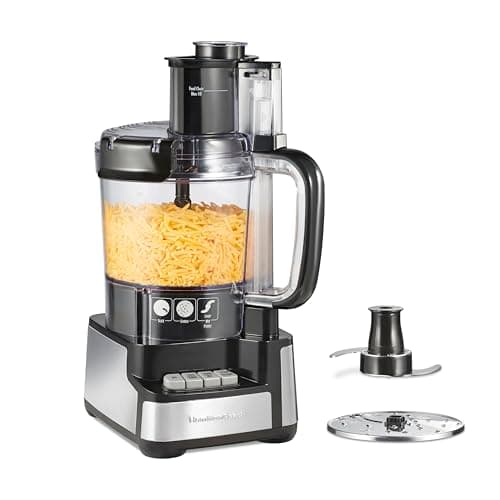
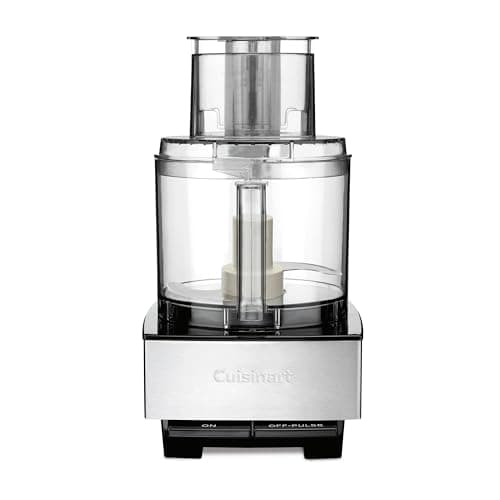
For most home cooks, the $150-250 range offers the best combination of performance, durability, and features. The Cuisinart Custom 14-Cup at ~$230 is the benchmark. If you're on a tight budget, the Ninja BN601 at ~$100 or the Hamilton Beach at ~$50 are surprisingly capable. Premium models from Breville ($450-700) and Magimix (~$400) are worthwhile if you cook daily and demand professional-grade precision, but they're overkill for occasional use.
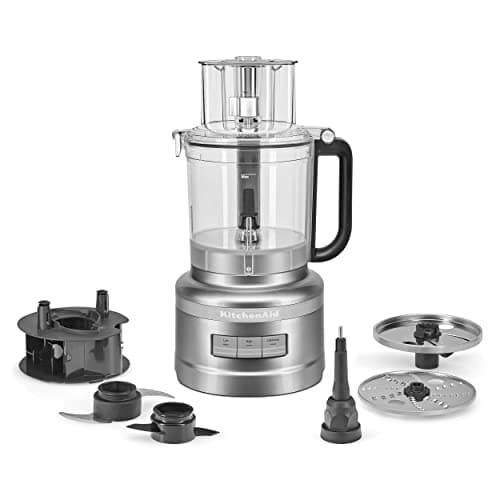
Food choppers are typically 3-4 cup mini appliances designed only for basic chopping - they can't slice, shred, knead dough, or handle large quantities. A full-size food processor comes with interchangeable discs and blades that let you chop, slice, shred, grate, puree, mix, and knead. If you only need to mince garlic and onions, a chopper will do. For anything beyond that, a food processor is the far more versatile investment.
Food processors excel at mixing and quickly developing gluten in bread dough, pie crust, and pasta dough - tasks that require short, intense bursts of power. The S-blade or dedicated dough blade processes bread dough in about 60 seconds compared to 10+ minutes of hand kneading. However, food processors have capacity limits for dough (usually around half the bowl's rated capacity), and they work dough very aggressively, so you need to watch timing carefully to avoid over-processing.
The safest method is to fill the bowl halfway with warm water and a drop of dish soap, then pulse 5-10 times - this self-cleans the bowl and blade. Rinse carefully, handling the blade by its center hub, never the edges. Most modern food processors have dishwasher-safe bowls, lids, and blades, which is the safest cleaning option. Always store blades in a protective sheath or the included disc holder rather than loose in a drawer.

 1/5
1/5