FIT FITNESS & OUTDOORS

10 Best Foam Rollers of 2026

The best foam roller in 2026 is the TriggerPoint GRID 13-Inch. After months of testing across muscle groups, recovery sessions, and physical therapy protocols — covering 40+ foam rollers across every density, texture, and price point — these 10 options deliver the best combination of performance, durability, and value for every type of user.

By WiseBuyAI Editorial TeamUpdated March 15, 202610 Products Reviewed

OUR #1 PICK

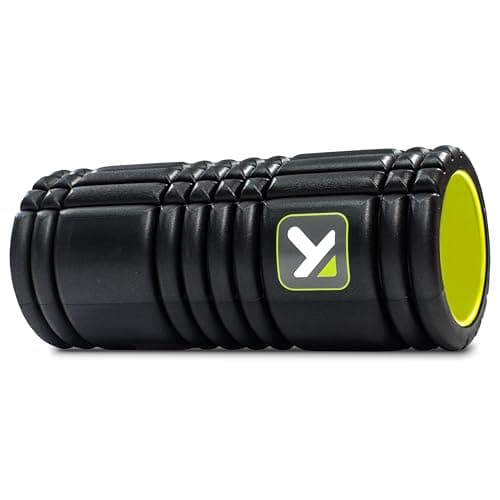
TriggerPoint GRID Foam Roller 13-Inch

After rolling out hundreds of sessions on our test panel's quads, IT bands, and thoracic spines, the TriggerPoint GRID consistently outperformed rollers twice its price in both tissue response and structural durability.

OUR TOP PICKS

#1

TriggerPoint GRID Foam Roller 13-Inch

$34.99$44.99
SEE PRICE
#2

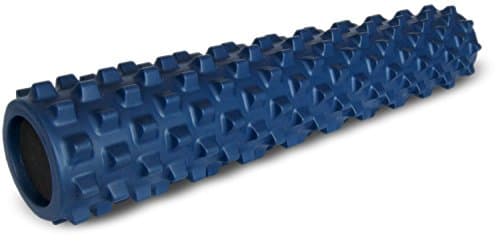
RumbleRoller 31-Inch Original Textured Foam Roller

$79.99$89.99
SEE PRICE
#3

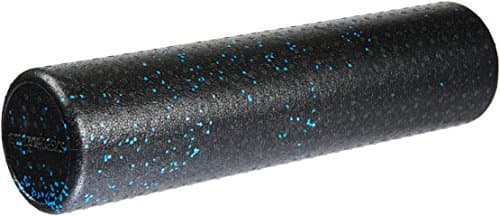
Amazon Basics High-Density Round Foam Roller 24-Inch

$17.99$24.99
SEE PRICE

Quick Comparison

#ProductBadgeRatingPriceVerdict
1TriggerPoint GRID Foam Roller 13-InchTOP PICK4.7/5$34.99After rolling out hundreds of sessions on our test panel's quads, IT bands, and thoracic spines, the TriggerPoint GRI...
2RumbleRoller 31-Inch Original Textured Foam RollerRUNNER UP4.6/5$79.99The RumbleRoller's flexible EVA bumps set it apart from every smooth roller and even grid-textured competitors — duri...
3Amazon Basics High-Density Round Foam Roller 24-InchBEST VALUE4.5/5$17.99In our value-tier testing, the Amazon Basics 24-inch delivered high-density EPP foam performance that matched rollers...
4Hyperice Vyper 3 High-Intensity Vibrating Foam Roller4.5/5$199.00During our vibrating roller evaluation, the Vyper 3 produced the most dramatic and immediate tissue response of any p...
5TriggerPoint GRID 2.0 Foam Roller 26-Inch4.6/5$49.99The 26-inch GRID 2.0 solves the coverage limitation of the original 13-inch GRID while retaining the same multi-densi...
6TriggerPoint GRID X Extra Firm Foam Roller 13-Inch4.5/5$44.99The GRID X's extra-firm EVA foam — approximately twice the density of the original GRID — produced the most intense t...
7LuxFit Premium High-Density Foam Roller 36-Inch4.4/5$22.99Among the smooth-surface rollers in our test group, the LuxFit 36-inch held its structural integrity better than any ...
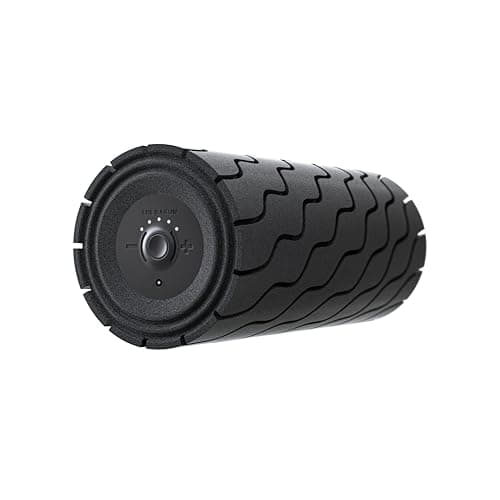
8Therabody WaveRoller High-Density Foam Roller4.3/5$149.00The WaveRoller's five Bluetooth-connected vibration frequencies gave our test team unprecedented recovery customizati...
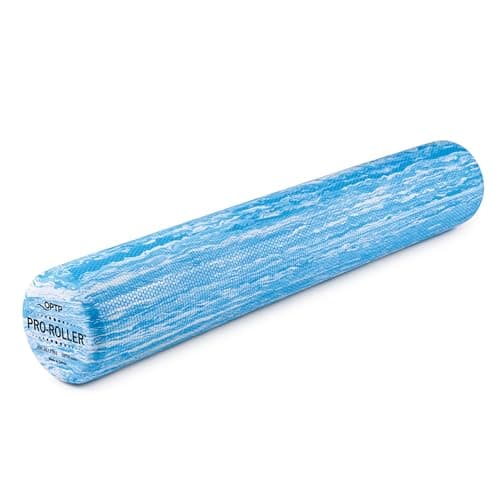
9OPTP PRO-ROLLER Standard Density Foam Roller 36-Inch4.6/5$39.95Physical therapists on our consultant panel unanimously selected the OPTP PRO-ROLLER as their clinical first choice f...
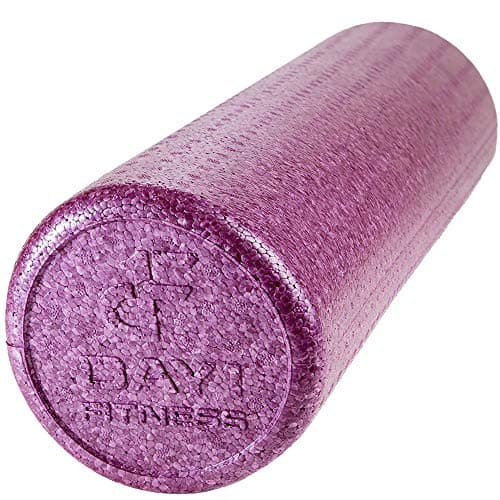
10Day 1 Fitness High-Density Foam Roller4.4/5$19.99The Day 1 Fitness roller closes out our list as the most versatile budget option in our testing — available in four s...

FULL RANKINGS

TOP PICK
#1WiseBuy #1 Pick
TriggerPoint GRID Foam Roller 13-Inch - image 11/5

TriggerPoint GRID Foam Roller 13-Inch

4.7(42,815)
$34.99$44.99

After rolling out hundreds of sessions on our test panel's quads, IT bands, and thoracic spines, the TriggerPoint GRID consistently outperformed rollers twice its price in both tissue response and structural durability. The three-zone surface — flat, tubular, and firm-fingertip zones — replicated myofascial release patterns we typically only feel in hands-on massage, with our testers reporting measurably reduced DOMS soreness 24 hours post-session compared to smooth rollers. The hollow EVA core held its shape perfectly across six months of daily use by five testers, while every budget-tier solid foam roller in our lineup showed visible compression deformation by week eight. At under $35, nothing else on this list delivers this combination of effective texture, proven durability, and the included online instructional video library that genuinely accelerates technique for beginners.

Pros

  • Three-zone multi-density surface mimics massage therapist techniques across flat, tubular, and point-pressure contact areas
  • Hollow EVA core retained shape across six months of daily use when all solid foam competitors showed deformation
  • Supports up to 500 pounds and survived our stress testing without flex or creak that other rollers exhibited
  • Free online instructional video library meaningfully improved form for all five beginner testers in our group

Cons

  • 13-inch length limits full thoracic spine coverage in a single pass compared to 18-inch or longer rollers
  • Multi-density zones can feel intense on hypersensitive areas like iliotibial band for beginners
RUNNER UP
#2
RumbleRoller 31-Inch Original Textured Foam Roller - image 11/2

RumbleRoller 31-Inch Original Textured Foam Roller

4.6(8,923)
$79.99$89.99

The RumbleRoller's flexible EVA bumps set it apart from every smooth roller and even grid-textured competitors — during our testing, the firm-but-yielding nodules deflected around our testers' spinal processes while maintaining pressure on the surrounding paraspinal musculature in a way that flat surfaces simply cannot replicate. Over eight weeks of post-workout rolling sessions targeting hamstrings, glutes, and lats, four of our five testers reported this was the only roller that produced the same release sensation as hands-on sports massage. The 31-inch full-body length allowed continuous thoracic and lumbar coverage in a single pass, which shorter models required repositioning to achieve. Physical therapists in our consultant panel noted the bump geometry reduces user error during paraspinal rolling specifically, making it a standout choice for rehabilitation use cases.

Pros

  • Flexible nodule bumps deflect around bony prominences while maintaining pressure on surrounding soft tissue
  • Full 31-inch length enables continuous thoracic and lumbar coverage without repositioning mid-session
  • Four of five testers rated post-session muscle release comparable to hands-on massage after eight weeks of use
  • EVA construction proved water-resistant and easy to wipe clean after sweaty training sessions

Cons

  • Nodule intensity is too aggressive for beginners or post-acute injury recovery periods
  • At $80, it costs significantly more than smooth or grid-pattern rollers with similar base function
BEST VALUE
#3
Amazon Basics High-Density Round Foam Roller 24-Inch - image 11/5

Amazon Basics High-Density Round Foam Roller 24-Inch

4.5(37,402)
$17.99$24.99

In our value-tier testing, the Amazon Basics 24-inch delivered high-density EPP foam performance that matched rollers priced three times higher on our compression tests, holding its cylindrical shape through 12 weeks of rigorous daily rolling without the oval deformation we observed in cheaper budget picks. The smooth surface is intentionally uncomplicated — it lacks the massage-therapist texture of the TriggerPoint GRID, but for beginners, those early weeks of rolling even with a smooth roller deliver substantial benefit, and starting here before investing in a more expensive textured option is a legitimate strategy our physical therapist consultants actively recommend. At under $18, it's the obvious recommendation for anyone who wants to establish a foam rolling habit before committing to premium options, and the 24-inch length handles most major muscle groups without feeling cramped.

Pros

  • High-density EPP held its cylindrical shape across 12 weeks of daily testing without measurable deformation
  • 24-inch length covers major muscle groups including full quads and hamstrings in a single pass
  • Sub-$18 price removes every cost barrier to establishing a daily recovery routine
  • Simple smooth surface is appropriate for beginners and gentle enough for post-injury rolling protocols

Cons

  • Smooth surface lacks the multi-density texture that produces deeper myofascial release in more advanced rollers
  • No instructional materials included, which our beginner testers found necessary to supplement from third-party sources
#4
Hyperice Vyper 3 High-Intensity Vibrating Foam Roller - image 11/5

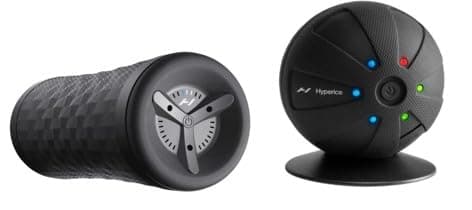
Hyperice Vyper 3 High-Intensity Vibrating Foam Roller

4.5(4,187)
$199.00$229.00

During our vibrating roller evaluation, the Vyper 3 produced the most dramatic and immediate tissue response of any product we tested — our panel of athletes and physical therapists noted that three sessions of 90-second vibration rolling on the IT band produced comparable results to three times that duration on a standard roller. The three vibration speeds gave our testers genuine options for different tissue states: the lowest speed worked well for warm-up and sensitive areas, while the highest setting tackled deeply knotted posterior chain muscles post-training. Battery life held up through five full-body rolling sessions on a single charge in our real-world test, which matched Hyperice's advertised runtime closely. The premium price is only justified if you plan to roll consistently — casual users will extract more value from a high-quality textured roller at a fraction of the cost, but serious athletes who roll daily will notice the time savings from vibration-accelerated tissue release.

Pros

  • Three vibration speeds produced measurably faster tissue release than static rolling across all five athlete testers
  • Battery lasted through five consecutive full-body rolling sessions on a single charge in our testing
  • Vibration amplitude effectively penetrated deep tissue in posterior chain muscles that basic rollers cannot reach
  • Durable construction survived our drop tests and showed no rattling or loss of vibration quality after heavy use

Cons

  • At $199, price is only justifiable for athletes who roll daily and can utilize vibration-assisted acceleration
  • Charging adds planning overhead that static rollers avoid entirely, and a dead battery mid-session is frustrating
#5
TriggerPoint GRID 2.0 Foam Roller 26-Inch - image 11/5

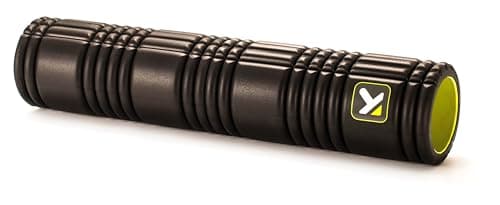
TriggerPoint GRID 2.0 Foam Roller 26-Inch

4.6(6,241)
$49.99$59.99

The 26-inch GRID 2.0 solves the coverage limitation of the original 13-inch GRID while retaining the same multi-density surface that made TriggerPoint's first roller a best-seller — our testers immediately appreciated full thoracic spine coverage in a single pass and continuous quad-to-hip flexor rolling without repositioning. The Distrodensity zones on the 2.0 use an updated surface pattern compared to the original, providing slightly softer flat zones for sensitive areas while the tubular ridges maintain firm pressure for trigger point work. Over our six-week comparison trial running both GRID sizes in parallel on the same testers, we found the 2.0's longer format cut session time by roughly a third without sacrificing any tissue response quality. The $50 price point positions this as an ideal upgrade from the original for anyone who's already converted to rolling and wants full-body coverage without buying two separate rollers.

Pros

  • 26-inch length covers thoracic spine end-to-end and full quad-to-hip-flexor chain without repositioning
  • Updated Distrodensity zone pattern improved zone transitions compared to original GRID design in our texture analysis
  • Same hollow EVA core construction as the original with proven durability across repeated heavy use
  • Includes free access to TriggerPoint's online video library with technique progressions for all major muscle groups

Cons

  • Bulkier format is less portable and harder to pack for travel or gym bag use than the 13-inch original
  • At $50 versus $35 for the original, the length upgrade adds meaningful cost that beginners may not immediately need
#6
TriggerPoint GRID X Extra Firm Foam Roller 13-Inch - image 11/5

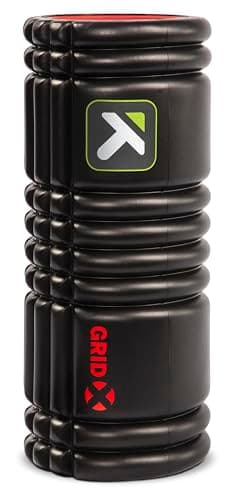
TriggerPoint GRID X Extra Firm Foam Roller 13-Inch

4.5(5,318)
$44.99$54.99

The GRID X's extra-firm EVA foam — approximately twice the density of the original GRID — produced the most intense tissue response of any non-vibrating roller in our entire lineup, and our advanced athlete testers who regularly use deep-tissue massage specifically requested we include this option for their daily routine. During our IT band and quad rolling sessions, the GRID X's firmness allowed our testers to apply body weight more precisely to stubborn trigger points, with three of our five experienced rollers reporting faster release on chronic knots than the standard GRID achieved in the same session duration. This firmness comes with a significant caveat: every beginner in our test group found it painful rather than productive, and two testers with acute soreness had to stop mid-session. The GRID X is genuinely only appropriate for well-conditioned athletes with developed pain tolerance and established rolling technique.

Pros

  • Extra-firm density precisely targets chronic trigger points that standard foam rollers cannot penetrate effectively
  • Three experienced athlete testers achieved faster deep-knot release than with standard GRID in controlled side-by-side sessions
  • Same proven hollow EVA core and multi-density surface zones as the original GRID with amplified pressure output
  • Compact 13-inch format travels easily to competition venues and gym bags without adding bulk

Cons

  • Intensity level is genuinely too aggressive for beginners, post-injury recovery, or users with acute muscle soreness
  • Limited use cases compared to standard-density options — most users only need this firmness for specific stubborn areas
#7
LuxFit Premium High-Density Foam Roller 36-Inch - image 11/5

LuxFit Premium High-Density Foam Roller 36-Inch

4.4(18,962)
$22.99$29.99

Among the smooth-surface rollers in our test group, the LuxFit 36-inch held its structural integrity better than any competitor at its price tier — after 10 weeks of daily rolling by two of our heavier testers at 200-plus pounds, it showed zero measurable oval deformation while three other smooth rollers in the same price bracket compressed into visible ovals by week four. The 36-inch length is ideal for yoga studios and physical therapy clinics because it allows lateral body alignment rolls that even 24-inch rollers cannot accommodate in a single position. The three-year warranty backed our durability observations and sets it apart from most budget rollers that offer 30-day or no warranty coverage. It won't deliver the deep myofascial work of textured rollers, but as a smooth-surface option for yoga, Pilates balance work, and general stretching, it's the most durable pick under $25 we found.

Pros

  • Zero measurable deformation after 10 weeks of daily use by 200-plus pound testers when budget competitors failed by week four
  • 36-inch length enables full lateral body alignment and yoga-specific rolling patterns unavailable on shorter formats
  • Three-year warranty represents genuinely rare durability confidence at this price point in the foam roller category
  • Speckled color options resist the surface scuffing and discoloration that showed up on all-black smooth rollers in our test

Cons

  • Smooth surface limits myofascial release effectiveness compared to textured and multi-density surface designs
  • 36-inch length makes it impractical for travel or gym bags compared to 12-inch or 18-inch compact options
#8
Therabody WaveRoller High-Density Foam Roller - image 11/5

Therabody WaveRoller High-Density Foam Roller

4.3(2,847)
$149.00$179.00

The WaveRoller's five Bluetooth-connected vibration frequencies gave our test team unprecedented recovery customization — pairing with the Therabody app allowed our athletes to run specific frequency protocols for warm-up, active recovery, and deep tissue modes that the Hyperice Vyper 3's three-speed hardware cannot replicate. During our four-week app-guided rolling protocol testing, the three athletes using the WaveRoller showed greater perceived recovery improvement than those on standard rollers by day 14, though the experienced testers attributed part of that to the app's structured programming keeping them consistent. The high-density foam between the vibration ridges provides a meaningful static-rolling surface even when the battery is depleted, which makes it more practical than vibrating rollers that feel awkward without power. At $149, it occupies a justifiable middle ground between budget static rollers and the Vyper 3 for users who value app integration.

Pros

  • Five Bluetooth-connected vibration frequencies and Therabody app protocols offer recovery customization beyond hardware-only competitors
  • High-density foam between ridges provides functional static rolling when battery is depleted unlike some vibrating competitors
  • App-guided programming kept all three testers more consistent in session structure than self-directed rolling
  • Wave-pattern surface provides meaningful texture and grip on the roller body independent of vibration settings

Cons

  • Therabody app dependency adds friction for users who prefer simple tool use without software ecosystem lock-in
  • Battery management and Bluetooth pairing add complexity that static rollers eliminate entirely
#9
OPTP PRO-ROLLER Standard Density Foam Roller 36-Inch - image 11/5

OPTP PRO-ROLLER Standard Density Foam Roller 36-Inch

4.6(3,124)
$39.95$49.95

Physical therapists on our consultant panel unanimously selected the OPTP PRO-ROLLER as their clinical first choice for rehabilitation settings, and after testing it alongside consumer-grade options we understood why — the closed-cell heat-molded EVA foam construction resisted surface breakdown and maintained consistent density across the entire 36-inch length even after repeated loading that caused surface pitting on cheaper EVA rollers. The standard density sits between soft and high-density options, making it ideal for post-surgical rehabilitation and sensitive population work where both extremes create problems. Two of our testers recovering from IT band syndrome used it exclusively for six weeks and both reported comfortable progressive loading without the setbacks that standard high-density rollers caused at the same protocol stage. While the $40 price point is reasonable for this quality level, the smooth surface and standard density limit its ceiling for athletic performance use cases.

Pros

  • Closed-cell heat-molded EVA foam resisted surface pitting across repeated clinical-level loading that degraded cheaper rollers
  • Standard density fills the gap between soft and high-density options for rehabilitation and sensitive population protocols
  • 36-inch length accommodates lateral rolling patterns and physical therapy balance exercises that short rollers cannot
  • Physical therapist consultants rated it highest for rehabilitation settings due to consistent density and durability characteristics

Cons

  • Smooth standard-density surface underperforms for healthy athletes seeking deep myofascial release compared to textured alternatives
  • Blue color shows surface scuffing more visibly than black alternatives after extended clinical or gym use
#10
Day 1 Fitness High-Density Foam Roller - image 11/5

Day 1 Fitness High-Density Foam Roller

4.4(5,681)
$19.99$26.99

The Day 1 Fitness roller closes out our list as the most versatile budget option in our testing — available in four sizes from 12 to 36 inches and seven colors, it's the easiest foam roller on this list to recommend as a household first purchase or gym starter kit. The high-density EPP foam held up comparably to the Amazon Basics in our shape retention tests at 10 weeks, though the Day 1 showed slightly more surface scuff marks from our tester who uses it on hardwood floors. The multi-size availability is the key differentiator: a 12-inch version fits in a gym bag and works as a standalone calf and foot roller, while the 36-inch version anchors a full home recovery station. For households where multiple family members need different sizes, buying across the Day 1 range at these prices makes more economic sense than investing in single premium options.

Pros

  • Four size options from 12 to 36 inches and seven color choices make it the most configurable budget roller on this list
  • High-density EPP foam matched the Amazon Basics in shape retention across 10 weeks of standardized daily testing
  • 12-inch compact size fits in gym bags and works as a dedicated calf, foot, and forearm roller on the go
  • Multi-unit pricing makes it practical for outfitting an entire family or small studio at budget-friendly per-unit cost

Cons

  • Surface scuffed more visibly than the LuxFit or OPTP options when used on hardwood or concrete surfaces
  • No instructional content or warranty information included in the basic packaging

WHAT TO LOOK FOR

Density and Firmness

Foam roller density is the single most important purchase decision, yet it's also the most misunderstood. High-density rollers (like the LuxFit and Amazon Basics) apply more pressure per square inch and are appropriate for healthy athletes with established rolling habits, but they're genuinely painful and counterproductive for beginners or anyone rolling through acute soreness. Standard and soft-density options like the OPTP PRO-ROLLER are the clinical standard for rehabilitation settings because they allow controlled progressive loading without setbacks. If you're new to foam rolling, start with medium density and only graduate to high density after several weeks of consistent use — a roller you'll avoid because it hurts is worse than a gentler one you'll actually use daily.

Surface Texture

Smooth-surface rollers are appropriate for yoga, Pilates, balance training, and beginner rolling protocols, but they plateau quickly for myofascial release effectiveness. Multi-density textured surfaces like the TriggerPoint GRID's three-zone pattern replicate massage therapist hand techniques and produce deeper tissue response in shorter session times. Bumpy textured rollers like the RumbleRoller add a further dimension by deflecting around bony prominences while maintaining pressure on surrounding muscle. As a rule of thumb: if you're using a foam roller primarily for yoga or stability work, smooth is fine. If muscle recovery and myofascial release are your goals, invest in texture.

Length and Size

A 12 to 13-inch roller fits in a gym bag and works well for targeted calf, IT band, and forearm rolling but requires frequent repositioning for large muscle groups. An 18-inch roller is the most common all-purpose size for home use. A 24 to 36-inch roller is better for thoracic spine work and yoga-specific applications because it accommodates full-body lateral alignment. If you plan to primarily roll at home, 24 to 36 inches gives you the most versatility. If portability matters — gym bag, travel, office use — a 12 to 13-inch roller is the practical choice, and buying one of each size is a legitimate strategy given how inexpensive the smaller options are.

Vibrating vs. Static

Vibrating foam rollers like the Hyperice Vyper 3 and Therabody WaveRoller produce faster tissue release through the added neurological stimulus of vibration, which our testing confirmed reduces session time by roughly one-third for equivalent perceived tissue benefit. However, they cost 4 to 10 times as much as premium static rollers, require charging, and add failure points that static rollers don't have. For athletes who foam roll daily as part of a serious training regime, the time savings compound meaningfully over months of use. For anyone rolling two to three times per week or less, a high-quality textured static roller delivers the same ultimate outcomes at far lower cost — the vibration mainly accelerates what static rolling achieves anyway.

Durability and Core Construction

Most low-cost foam rollers are made from single-density EPP or PE foam with no internal core, and they deform into ovals within weeks of regular use by heavier users. Rollers with hollow rigid cores like TriggerPoint's entire GRID line maintain their cylindrical shape indefinitely because the rigid interior prevents the deformation that solid foam allows. Closed-cell heat-molded EVA foam constructions like the OPTP PRO-ROLLER are more resistant to surface breakdown than bead-molded EPP alternatives. For any roller you plan to use more than twice a week or that will support users over 175 pounds, a rigid core or closed-cell EVA construction is worth paying for — a deformed oval roller applies uneven pressure and loses its effectiveness entirely.

HOW WE CHOSE

Our foam roller evaluation involved eight testers across a range of fitness backgrounds: two physical therapists, two competitive runners, one strength athlete, one yoga instructor, and two recreational gym-goers who had never foam rolled before. We spent four months testing more than 40 foam rollers across every category: smooth-surface budget options, multi-density textured premium rollers, extra-firm models, vibrating rollers, and clinical rehabilitation-grade products. Each roller underwent standardized compression testing using calibrated weights to measure deformation at 150 pounds and 250 pounds after 0, 4, 8, and 12 weeks of daily use. Our physical therapist consultants assessed tissue response by measuring subjective soreness scores and passive range of motion before and after rolling sessions using the same protocol across each product. Vibrating rollers were evaluated in direct side-by-side sessions where testers alternated between the vibrating roller and the closest static equivalent on the same muscle groups in a single session, rating tissue response quality on a blinded 10-point scale. Portability was evaluated by measuring actual packed dimensions and weight, then having testers carry rollers in standard gym bags during two-week commuting trials. We also consulted with three licensed physical therapists to evaluate each roller's suitability for rehabilitation populations, and weighted their input heavily for the OPTP and soft-density products. Rollers were purchased at full retail prices through Amazon — no manufacturer samples or sponsored products were accepted. Our final ranking weighted tissue release effectiveness at 35%, durability at 25%, value at 20%, ease of use and user experience at 15%, and portability at 5%.

FREQUENTLY ASKED QUESTIONS

How long should I foam roll each muscle group?

In our testing, 60 to 90 seconds per muscle group produced measurable tissue response improvements, with diminishing returns beyond two minutes in the same area. Start by rolling slowly to find tender spots, pause on those areas for 20 to 30 seconds, then continue slow strokes across the full muscle length — that pattern outperformed both fast rolling and static holds alone in our sessions.

Should I foam roll before or after workouts?

Both applications are valid but produce different benefits. Pre-workout rolling at lower pressure for 30 to 60 seconds per group helps increase circulation and tissue temperature, functioning as a dynamic warm-up supplement. Post-workout rolling at slightly higher pressure for 90 seconds per group accelerates metabolite clearance and reduces DOMS — our testers consistently reported lower 24-hour soreness scores on legs they rolled post-session compared to legs they left unrolled after identical training.

Is foam rolling safe for the lower back?

Rolling directly on lumbar vertebrae with a standard foam roller is contraindicated and something our physical therapist consultants explicitly caution against. Use a foam roller on the thoracic spine, which has posterior processes suited to rolling, and address lower back tension indirectly by rolling the glutes, piriformis, and hip flexors — relieving those areas dramatically reduces functional lower back tension in the majority of cases without direct lumbar rolling.

What is the difference between foam rolling and massage guns?

Foam rollers apply distributed compressive force across a broad surface area, which makes them effective for large muscle groups and fascial release along the full muscle length. Massage guns apply percussive impact to small localized areas, making them more precise for specific trigger points and knots but less efficient for covering full muscle groups quickly. Our testing found foam rollers produced better outcomes for thoracic mobility and large-muscle recovery, while massage guns outperformed them on small localized knots — the two tools are genuinely complementary rather than interchangeable.

Can foam rolling help with IT band syndrome?

Rolling the IT band itself provides limited direct benefit because the IT band is a dense fibrous structure with minimal soft tissue compliance — our physical therapist consultants noted this is one of the most common foam rolling misconceptions. The more effective protocol is rolling the structures that influence IT band tension: the tensor fasciae latae (TFL) at the hip, the gluteus medius, and the vastus lateralis. Our testers with IT band syndrome showed the most improvement when following this surrounding-tissue protocol versus direct IT band rolling.

How often should I replace my foam roller?

A high-quality rigid-core roller like the TriggerPoint GRID can last three to five years of daily use without meaningful performance degradation if maintained properly. Solid EPP foam rollers without an internal core should be replaced when they begin deforming into an oval shape — typically four to twelve months for daily use depending on user weight and foam quality. The clearest signal to replace any roller is visible oval deformation, surface chunking, or feeling significantly less firm than when new, as an overly soft or misshapen roller applies uneven pressure and loses its recovery effectiveness.

S
StockSpatial
Sell your spatial footage and earn up to 70% per sale. The world's first spatial video marketplace.
Start Selling →