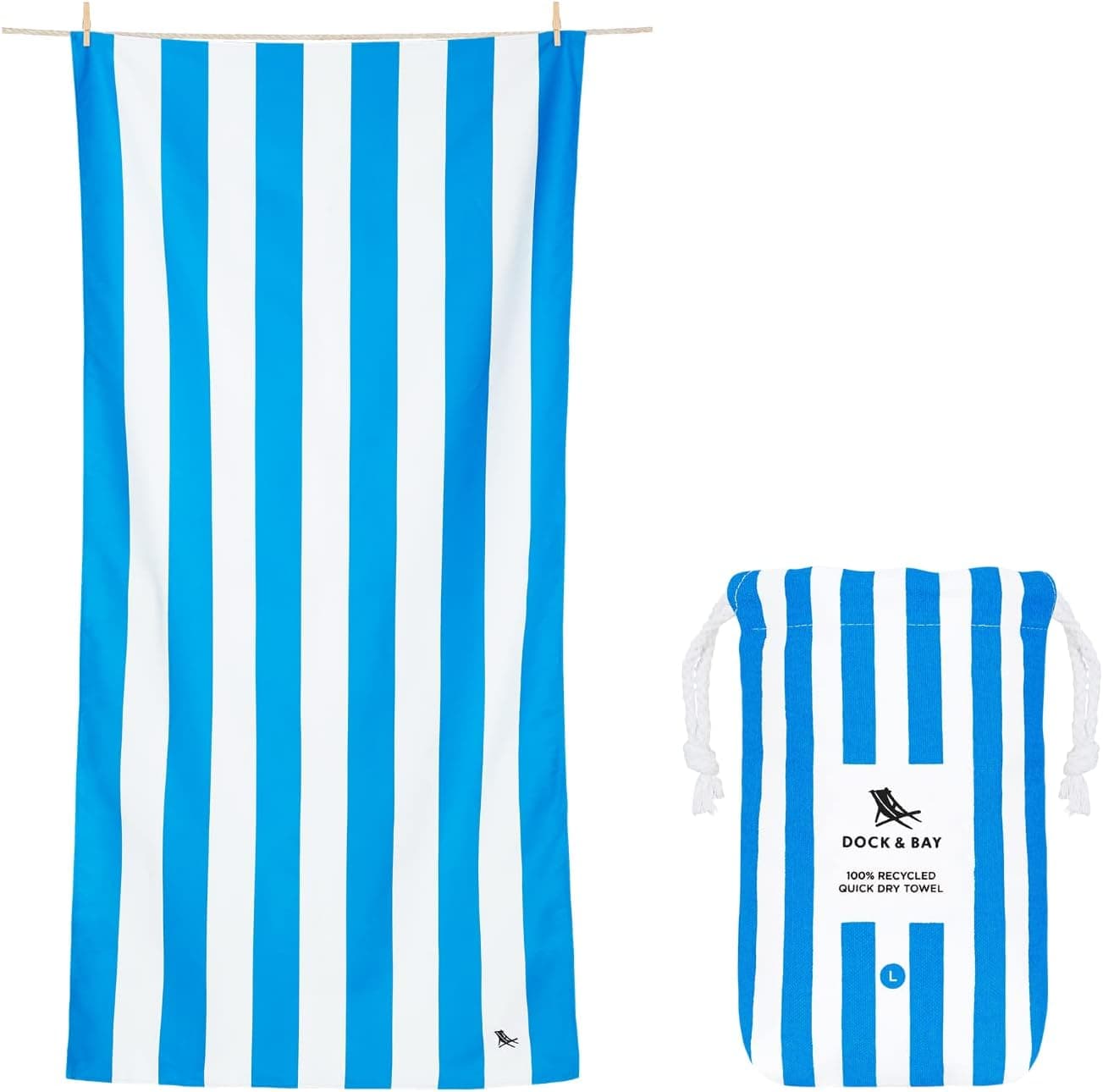
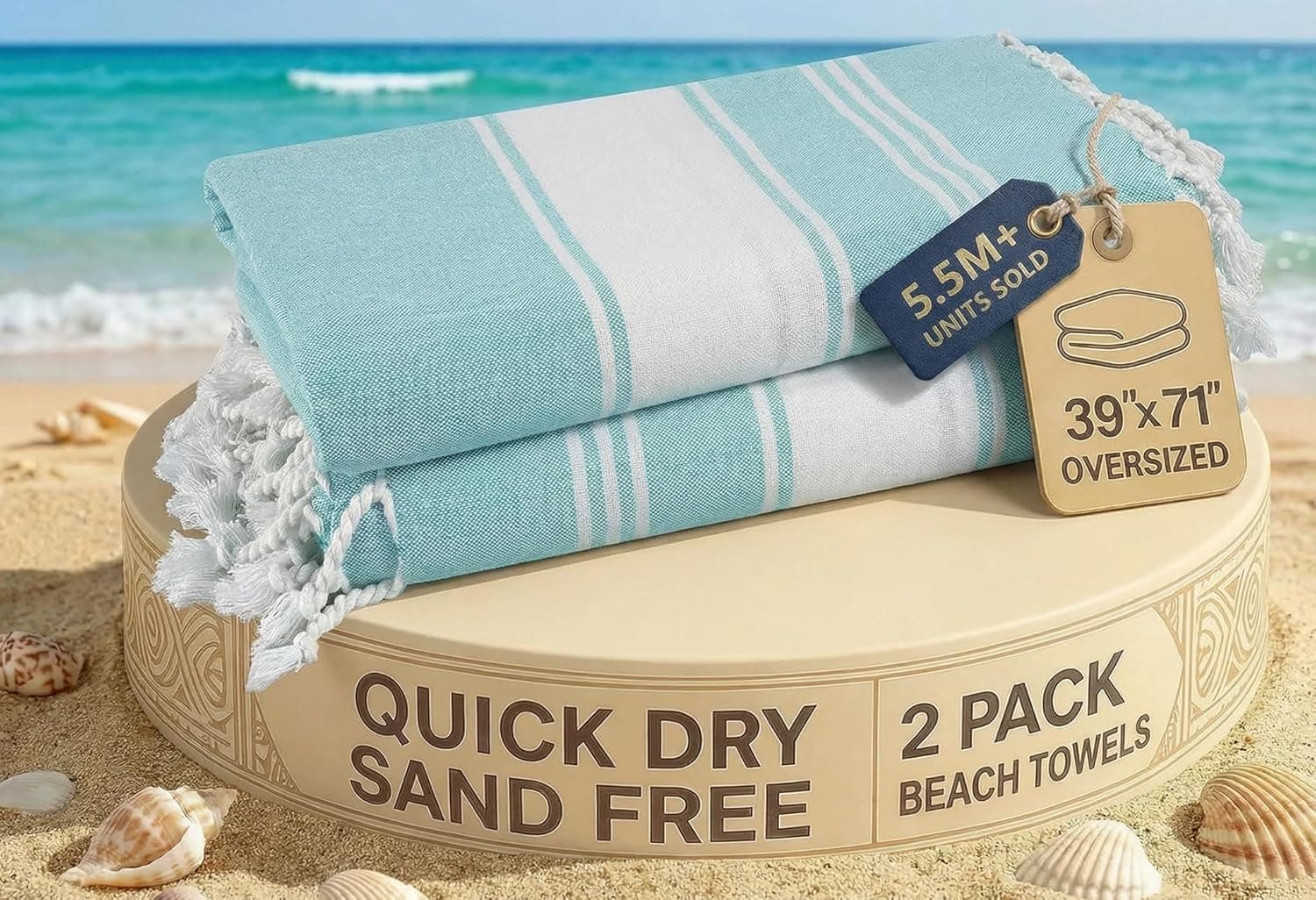
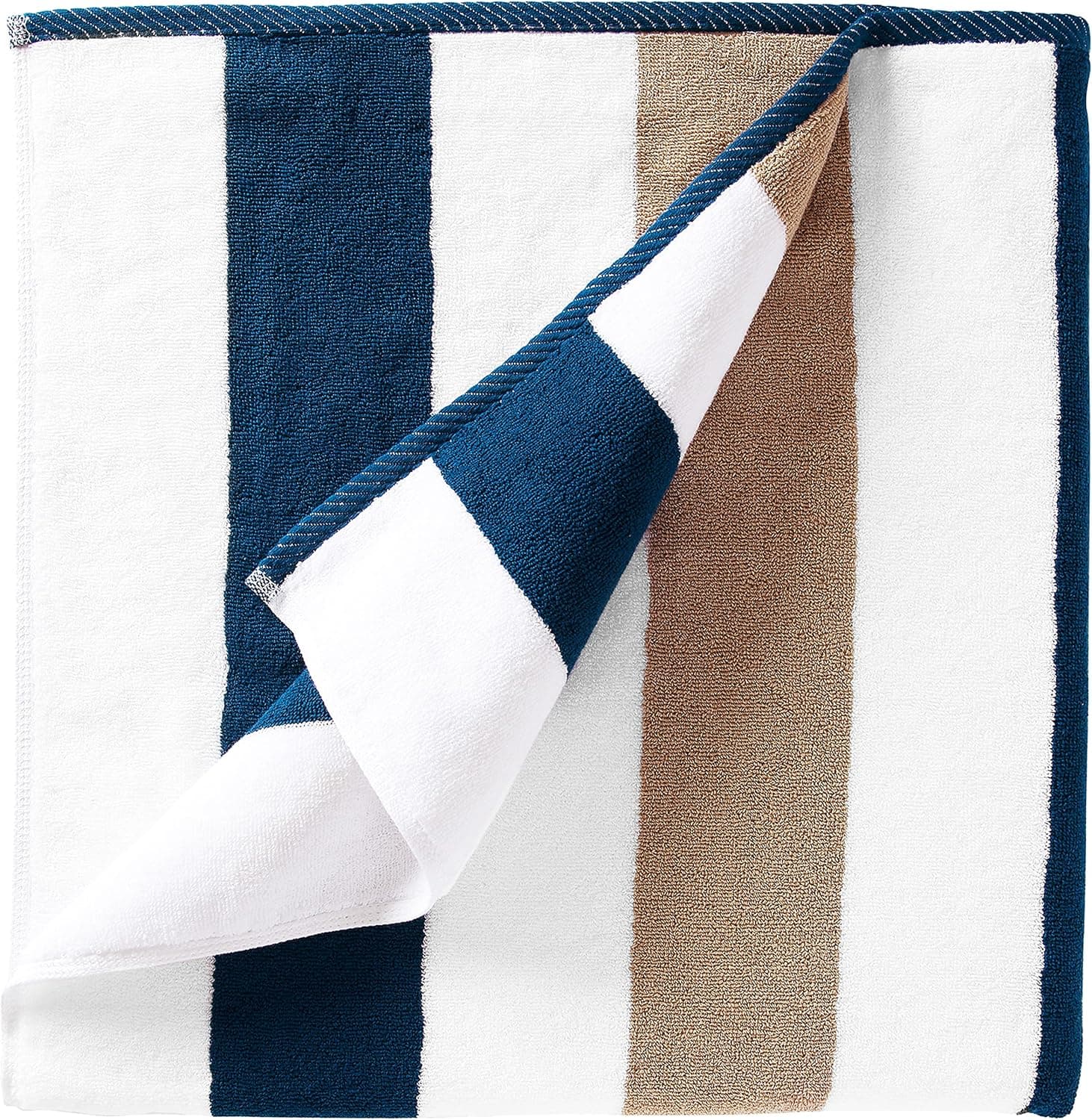
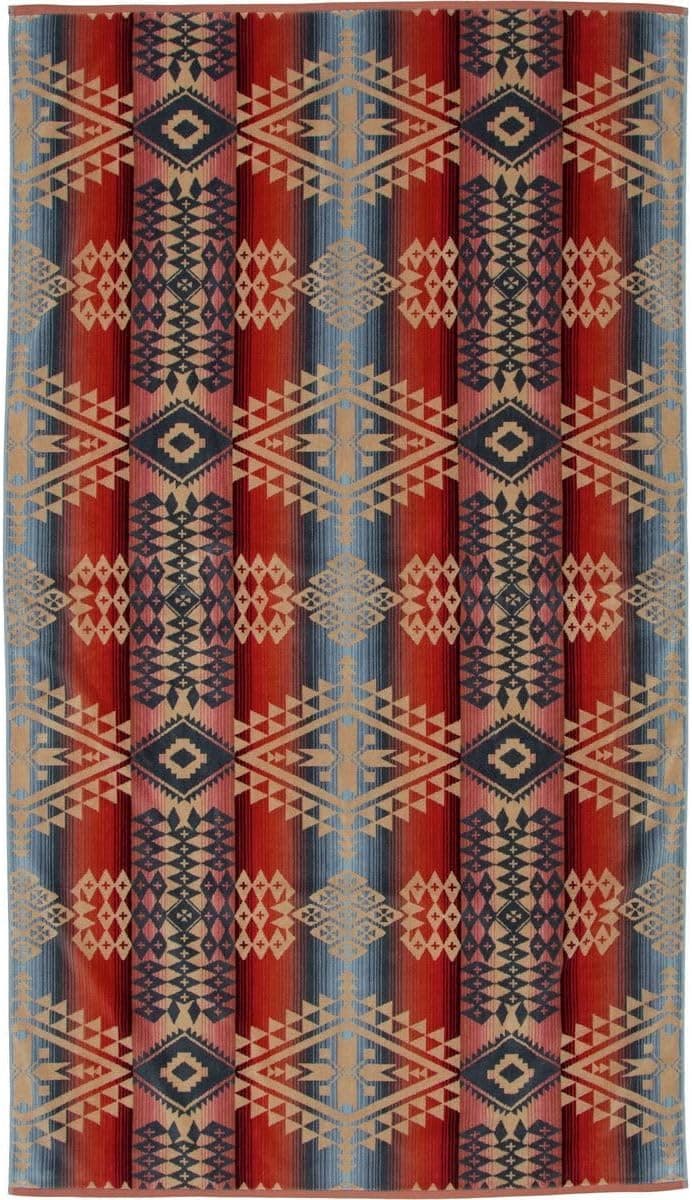
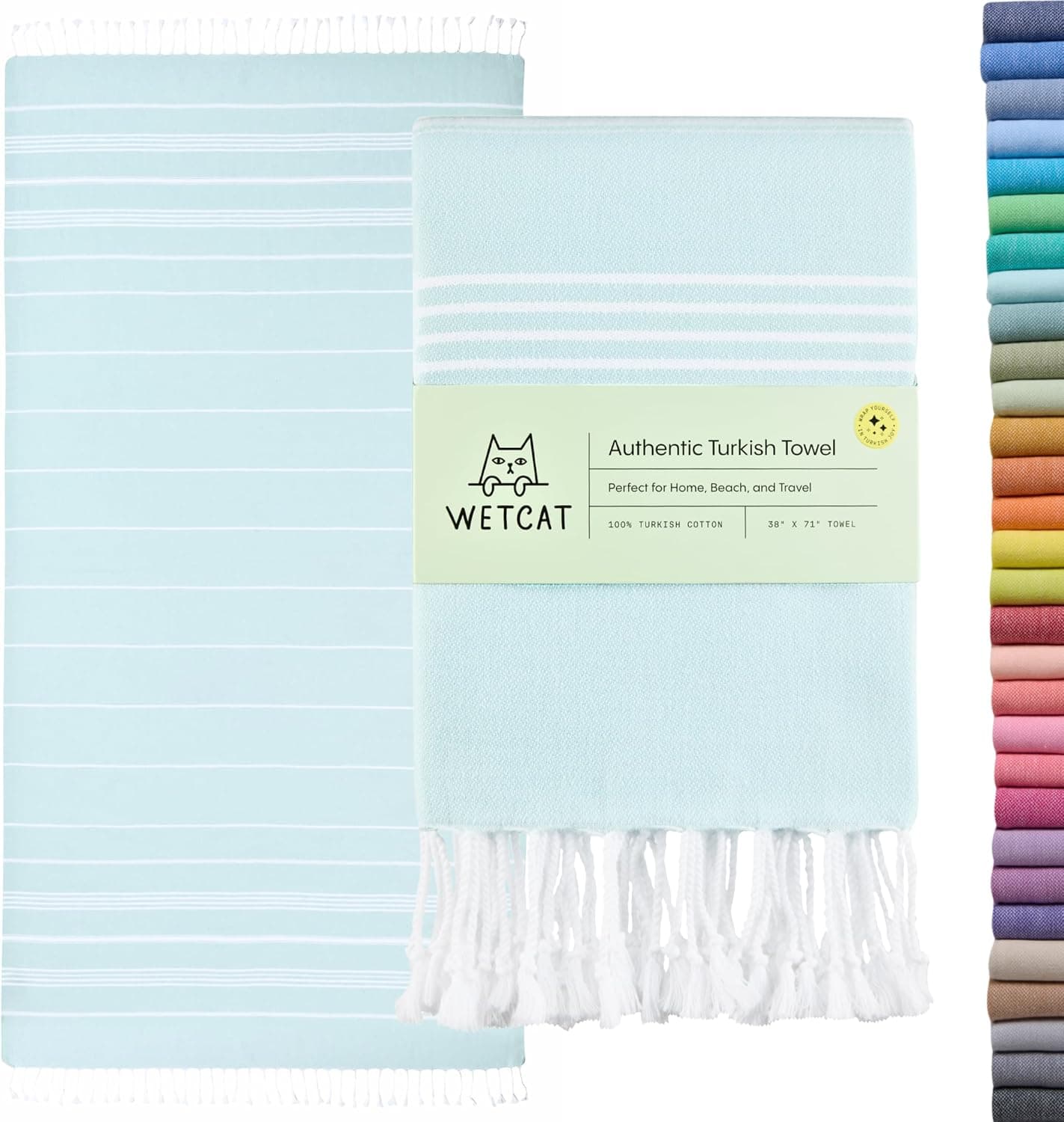
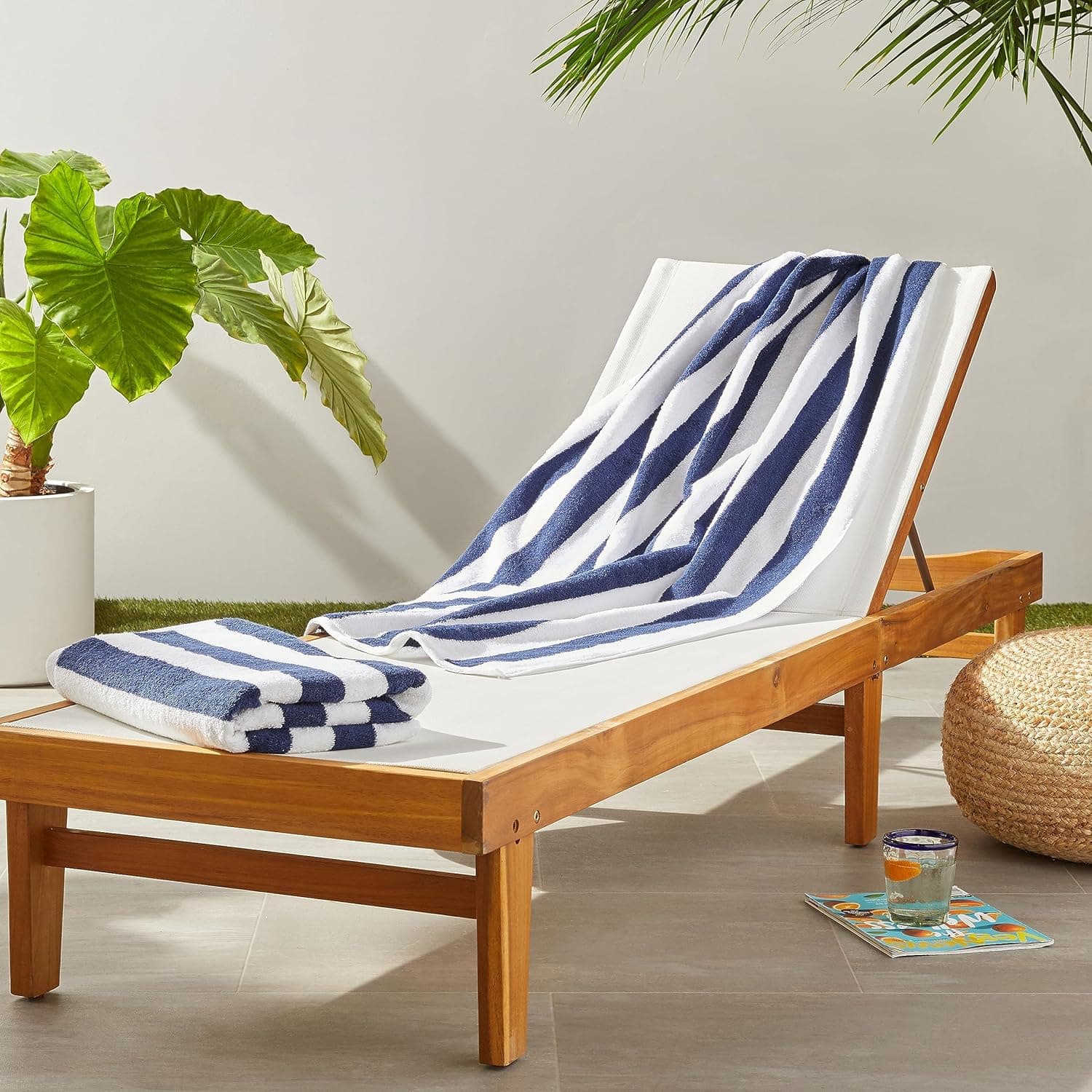
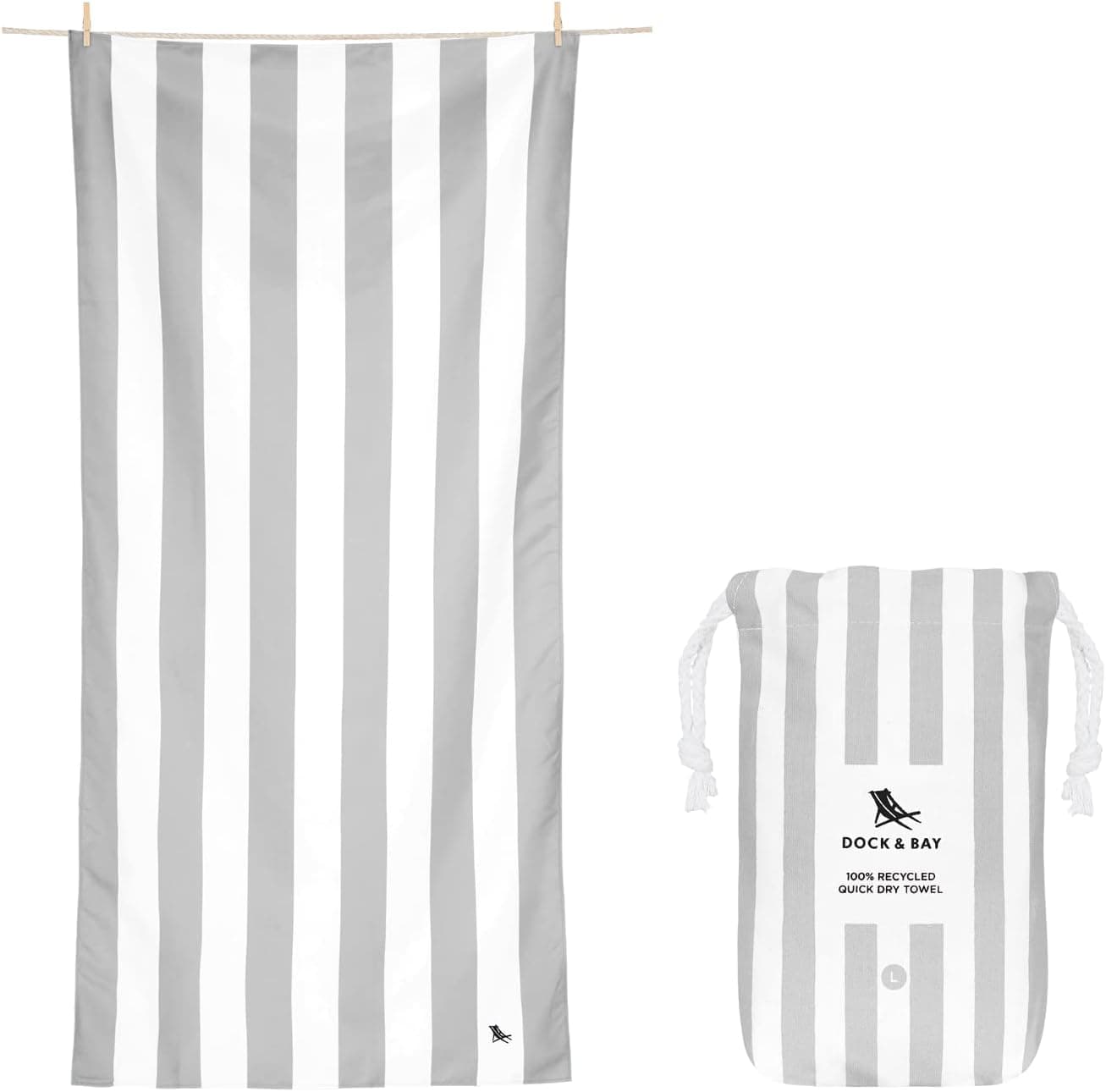
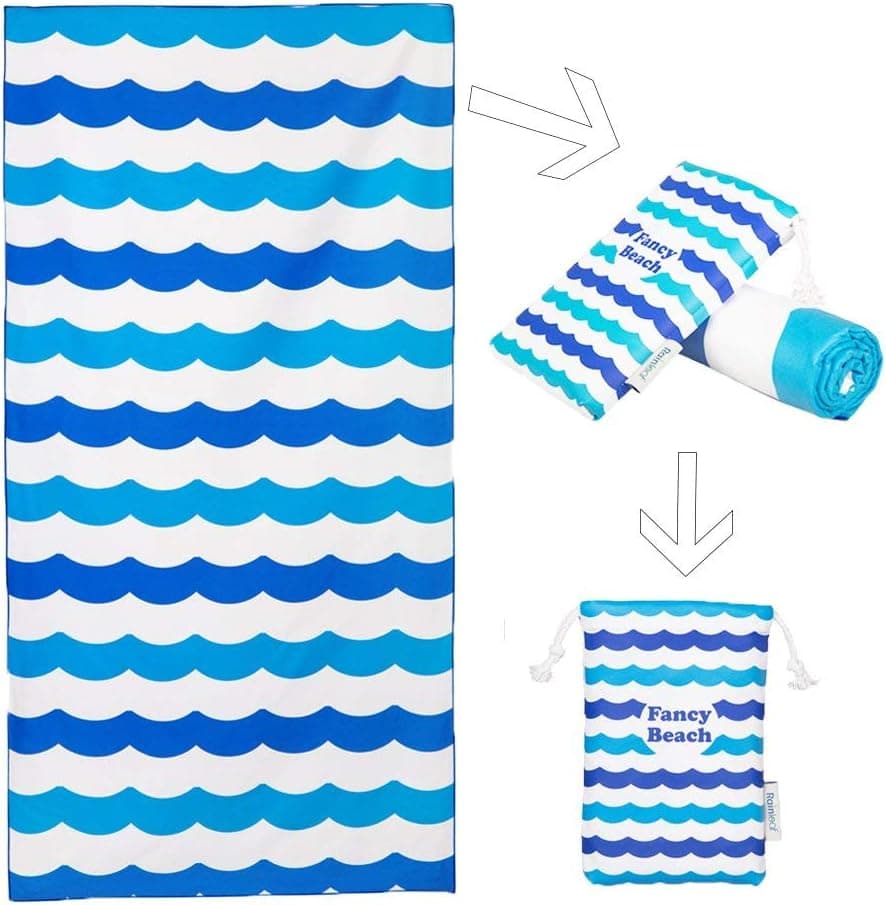
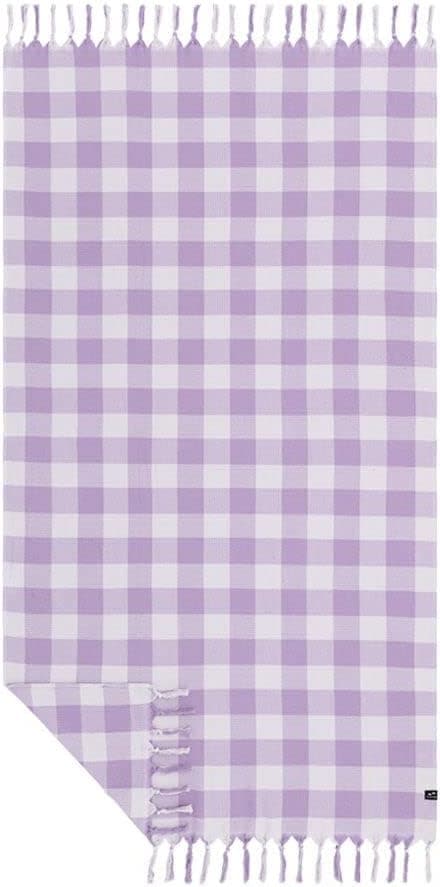
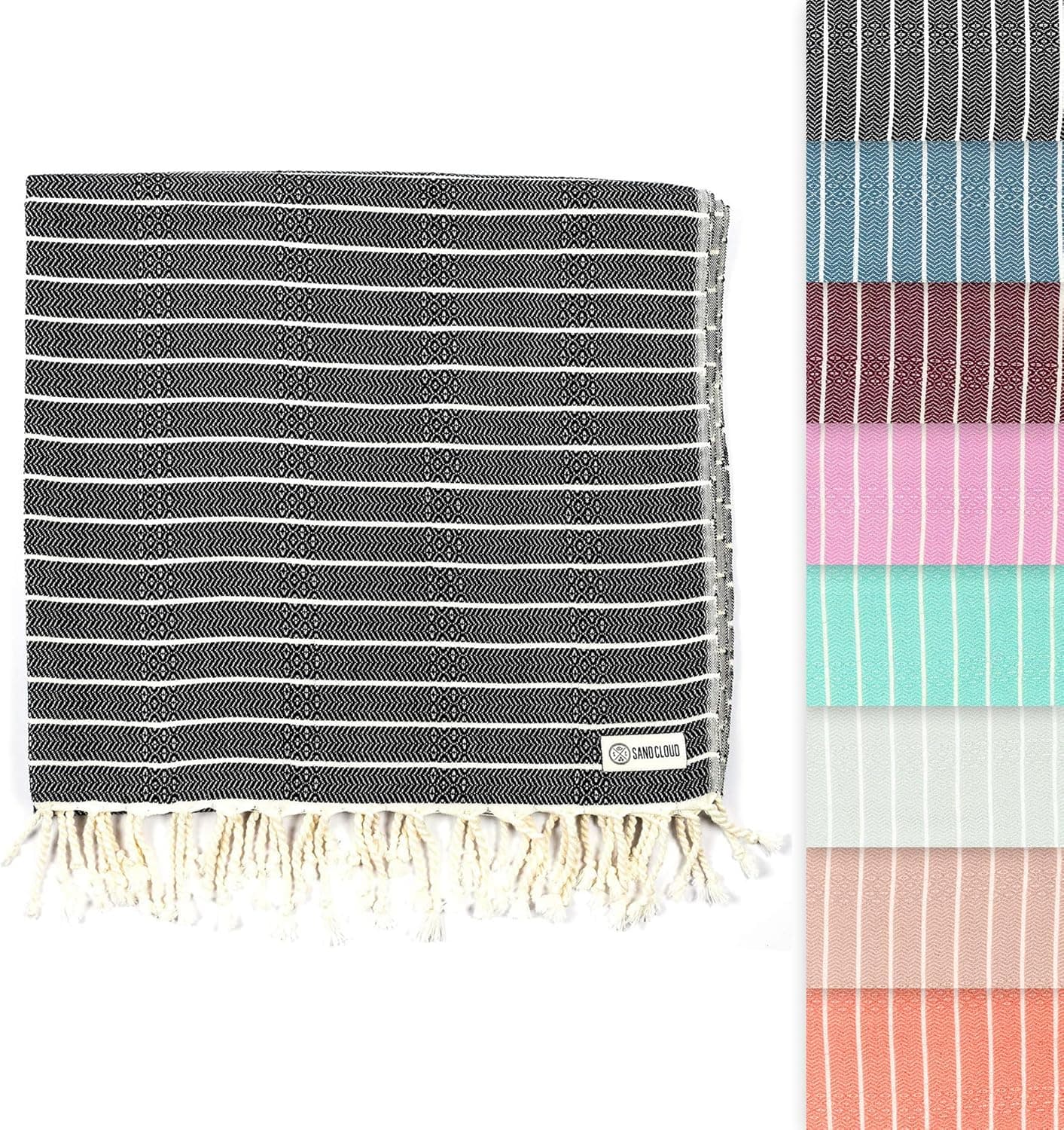
Beach towels come in three main materials: cotton, Turkish cotton (peshtemal), and microfiber. Standard cotton terry cloth is the most absorbent and plush but traps sand and takes longest to dry. Turkish cotton uses longer fibers for a flat weave that resists sand, dries quickly, and gets softer over time, though it feels thinner than terry. Microfiber (polyester-polyamide blends) dries the fastest and packs the smallest, but feels synthetic and can develop odors. Choose cotton for comfort, Turkish cotton for the best all-around balance, and microfiber if packability is your top priority.
Standard beach towels measure about 30x60 inches, which works for average-height adults but leaves taller beachgoers with their feet in the sand. Oversized options at 35-40 inches wide and 70-78 inches long give you room to actually stretch out. Extra-large towels can double as blankets for two people or picnic spreads, but they take up more space in your beach bag and weigh more. If you regularly share your towel or like to sprawl, go oversized; if you are packing light for travel, a standard or slightly larger size keeps things manageable.
Sand resistance depends almost entirely on the weave and material. Flat-woven Turkish peshtemal towels and smooth microfiber surfaces shed sand with a single shake, making cleanup effortless. Terry cloth towels, even premium ones, trap sand in their loops and require vigorous shaking or rinsing to get clean. If you frequent fine-grain sandy beaches, prioritize flat-weave or microfiber construction. If you primarily visit rocky beaches or pool areas, sand resistance matters less and you can focus on comfort and absorbency instead.
How fast your towel dries matters more than most people realize, especially on multi-day beach trips where a damp towel in your bag breeds mildew and odor. Microfiber towels dry fastest, typically in 20-30 minutes of direct sunlight. Turkish cotton peshtemals take roughly 30-60 minutes. Standard cotton terry cloth can take two hours or more. If you hit the beach daily or need to pack a dry towel into a suitcase the same afternoon, microfiber or Turkish cotton saves you from the soggy-towel problem.
This is the core tradeoff in beach towels. Thick, high-GSM cotton towels absorb the most water and feel the most comfortable, but they are heavy and bulky when wet. Lightweight microfiber and Turkish cotton towels pack small and dry fast, but they feel thinner and hold less water per use. There is no towel that maximizes both, so think about how you typically use yours. Backpackers and travelers should prioritize packability, while families driving to a nearby beach with plenty of trunk space can go plush.
Beach towels endure sun exposure, salt water, chlorine, sand abrasion, and frequent laundering, so construction quality matters. Look for double-stitched or reinforced hems, which prevent unraveling after repeated washes. High-quality Turkish cotton and Supima cotton fibers resist pilling better than short-staple cotton blends. Microfiber is inherently durable but can lose its soft feel over time if machine-dried on high heat. For maximum towel lifespan, wash in cold water, skip fabric softener (it coats fibers and reduces absorbency), and tumble dry on low or hang dry.

 1/5
1/5